
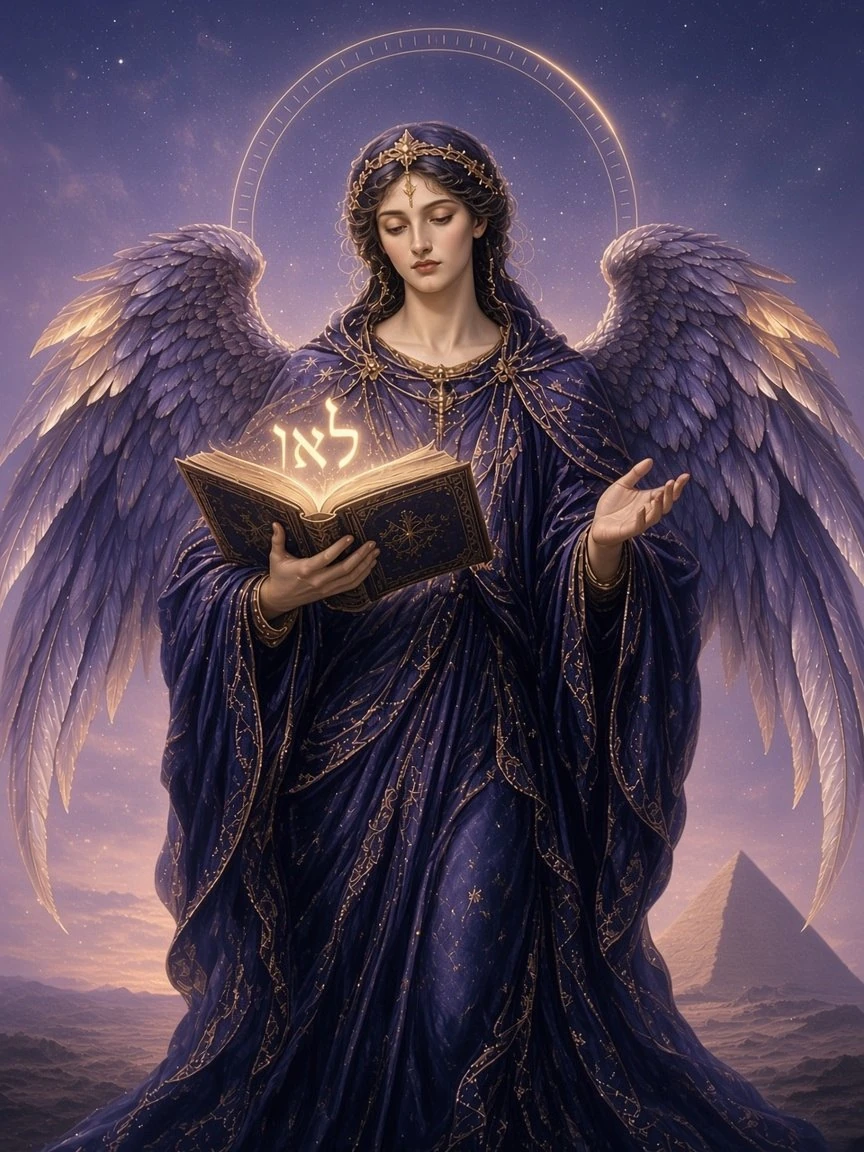
17th of the 72 · Choir of Thrones
Lauviah
Also known as Goth1 · Leviah2 · לאויה (Lauiah)3 · לאו (the three letters)4
Sources for these names
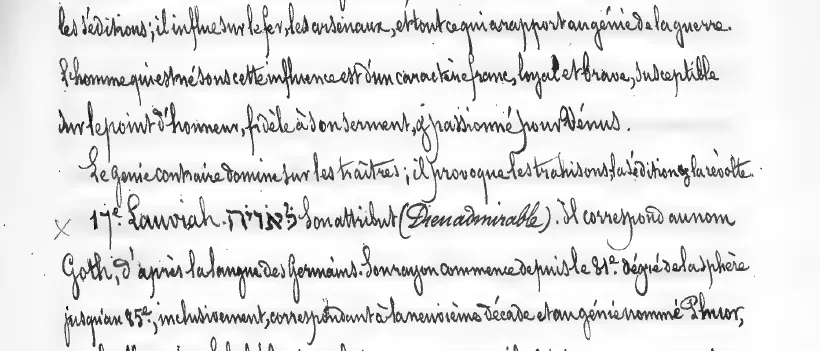
- 1. Lenain, La Science cabalistique (1823), BIU Santé Ms 5365 p. 65: “Il correspond au nom Goth, d’après la langue des Germains”
- 2. Agrippa, Three Books of Occult Philosophy III.25, table of the 72 (English 1651)
- 3. Angel form of the triad לאו: Exodus 14:19–21 by the rule in Agrippa III.25 and Reuchlin, De arte cabalistica (1517)
- 4. Reuchlin 1517, Book III; Kircher, Oedipus Aegyptiacus (1653)
Tracing her name backward
We go backward from the newest source to the oldest dated one, and step back only where a dated text or a published scholarly link anchors the step. Unproven or second-hand links are drawn dashed and marked. Raziel’s full chart is on his page.
Rest the pointer on a section to open it; click to keep it open.Tap a section to open it; tap again to close.
Name originwhat the name means and how it was built
One of the 72 “names” read out of Exodus 14:19–21. The triad לאו is taken letter by letter from the three verses; Renaissance Christian kabbalists (Reuchlin 1517; Agrippa 1533) turned each triad into an angel by adding -el or -iah. Lenain adds that Lauviah “corresponds to the name Goth, after the language of the Germans”.
Earliest sourcesthe name traced backward, with dated anchors
Solid = a link anchored in a dated sourceDashed = unproven, second-hand or a later equationNewest at the top; each step goes back in time. Tap any box to open its anchor.
- 1823
LauviahLenain, La Science cabalistique (Paris 1823; BIU Santé Ms 5365)Medium
Lenain gives each of the 72 a choir, five degrees of the zodiac and a psalm verse, as listed in the Sanctuary’s table of the 72.
older
- 1652–1654
the 72 in a circleKircher, Oedipus Aegyptiacus II.1Medium
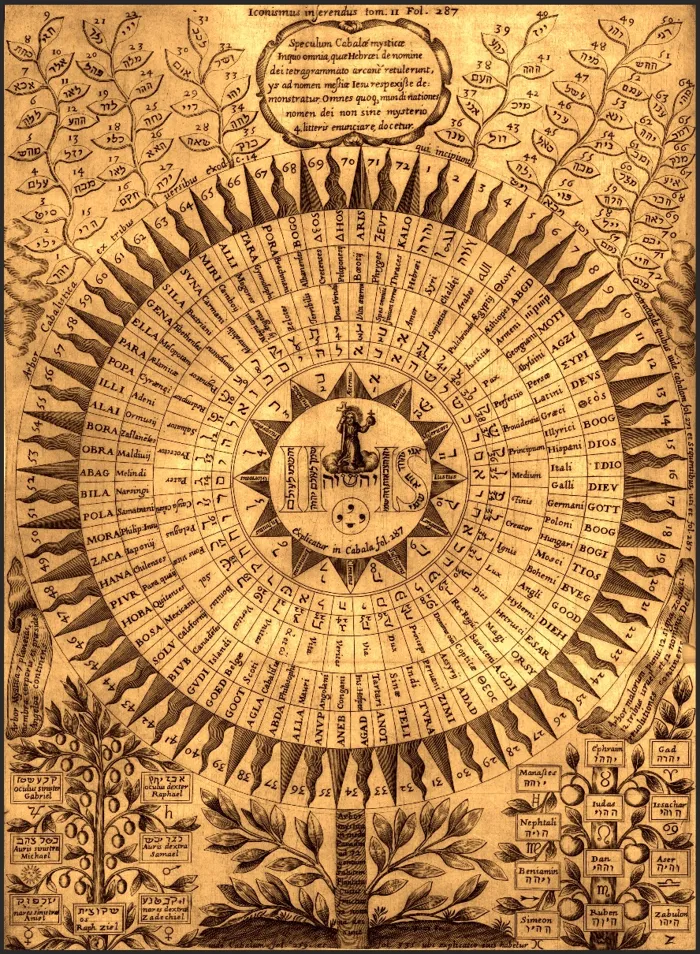
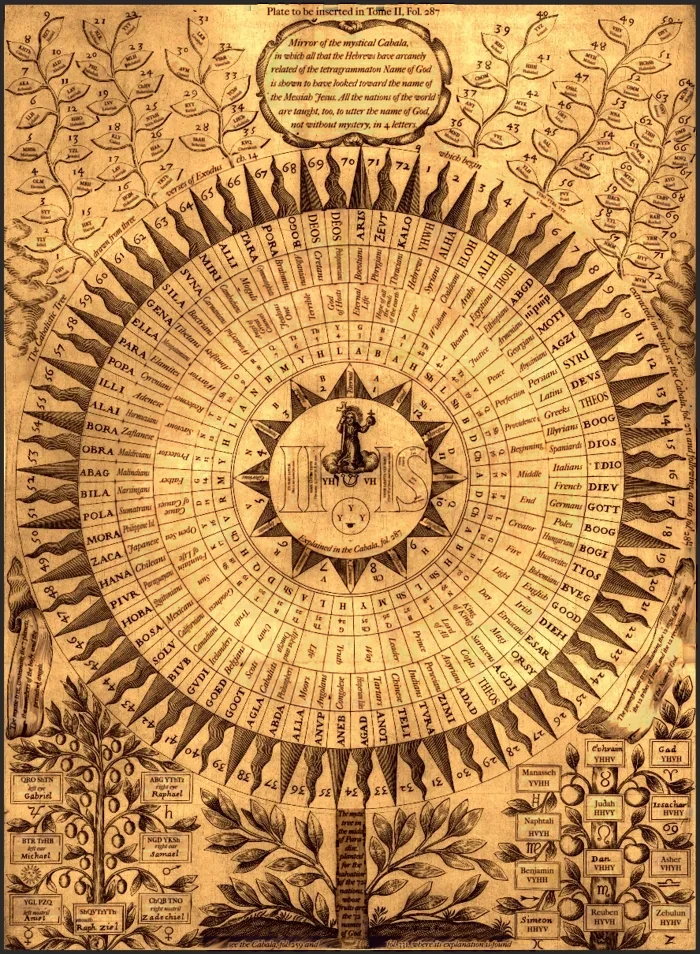
Kircher draws the 72 names as a great circle. Unverified for this name until the Hall reads Kircher’s plate.
older
- 1533 (English 1651)
LeviahAgrippa, Three Books of Occult Philosophy III.25, table of the 72High
The table of the 72 angels, each formed by adding -el or -iah to a triad of letters. Read Agrippa, De occulta philosophia, Cologne 1533 (Library).
older
- 1517
the triad becomes an angel’s nameJohannes Reuchlin, De arte cabalistica, Book IIIHigh
The oldest dated source the Hall relies on for the angel-names of the 72 (as on the Sanctuary’s Lauviah page). Before this there are only the letters.
the letters, not yet an angel
- 11th c.
לאו as one of the 72 namesRashi on Sukkah 45aHigh
Rashi explains the 72 names as read from the three verses of Exodus 14:19–21, “each of 72 letters”: the first letter of the first verse, the last of the middle verse and the first of the last, “and so on in this order”; the first name is והו (Hall translation; Sefaria).
read out of three verses
- the verses themselves
Exodus 14:19–21three verses of 72 letters eachHigh
The 17th letter of verse 19 (ל), the 17th letter from the end of verse 20 (א) and the 17th letter of verse 21 (ו), by the same rule. Hall check Computed from the Hebrew consonantal text of Exodus 14:19–21 (Sefaria, “Tanach with Text Only”; 72 letters in each verse): letter 17 of verse 19 is ל, letter 17 from the end of verse 20 is א, letter 17 of verse 21 is ו (final forms normalised). All 72 triads in the Sanctuary table match this count. Read Exodus in Gutenberg Bible: Exodus, Psalms and more (Library).
no anchor
The trail endsNo angel named Lauviah before Reuchlin (1517)No anchor
Before the Renaissance there are the letters and the method, but no angel of this name.
Also known asother names the sources give
Also known as Goth1 · Lauviah2 · Leviah3 · לאו (the three letters)4
Sources for these names
- Lenain 1823, BIU Santé Ms 5365 p. 65: “Il correspond au nom Goth, d’après la langue des Germains”
- Lenain 1823 (Sanctuary table of the 72)
- Agrippa III.25, table of the 72 (English 1651)
- Exodus 14:19–21 by Rashi’s rule (on Sukkah 45a)
Comparisonssimilar figures, where scholars draw the link
- The decans (House note). Lenain gives each of the 72 five degrees of the zodiac (72 × 5 = 360), so two of them make one 10° decan, the old Egyptian star-division (Neugebauer & Parker). That is arithmetic and the Hall’s own note, not a scholar’s identification.
Comparisons are listed only where a scholar makes the link, or are marked as the Hall’s own note. A parallel of role is not a lineage of name.
Further readingbooks in Raziel’s Library and beyond
Unverified and sourceswhat is still to check, and every source
Unverified
- Unverified Kircher plate not yet read for this name
Sources
- Rashi on Sukkah 45a (Sefaria)
- Reuchlin, De arte cabalistica (1517), Book III
- Agrippa, Three Books of Occult Philosophy III.25 (1533; English 1651)
- Kircher, Oedipus Aegyptiacus (1652–54)
- Lenain, La Science cabalistique (1823)
Hover or tap to turn the card.
- Name
- Lauviah, “Admirable God” (Dieu admirable); called Goth RevivalLenain 1823, entry 17: “Il correspond au nom Goth, d’après la langue des Germains”
- Letters
- לאו (Lamed, Aleph, Vav) → לאויה RenaissanceExodus 14:19–21, letter 17 of each verse (v.20 backward); Reuchlin 1517
- Number
- 17 of 72 (and 11 has the same letters) RenaissanceReuchlin 1517 III; Agrippa III.25 table
- Order
- Thrones, the third choir (angels 17–24) RevivalLenain 1823: “appartiennent au 3e ordre des anges nommé chœur des Trônes”
- Word (psalm)
- Psalm 8:2 (KJV 8:1): “O LORD, our Lord, how majestic is your Name in all the earth!” AncientHebrew WLC; Lenain quotes the Latin Domine Dominus noster, quam admirabile est nomen tuum
- Domain
- The high sciences, wondrous discoveries; gives revelations in dreams RevivalLenain 1823, p. 65
- Gifts
- Against torments of the mind and sadness, and for peaceful sleep at night RevivalLenain 1823, p. 65
- Those born under her
- Love music, poetry, literature and philosophy RevivalLenain 1823, p. 65
- Shadow
- Lenain’s “contrary genius” rules atheism and impious philosophers. This is a separate spirit, not Goth RevivalLenain 1823, p. 66
- Heaven
- The Sun; the ninth decan, genie Phuor RevivalLenain 1823, p. 65
- Degrees
- 81°–85° of the zodiac RevivalLenain 1823 (5° to each of the 72)
- Days
- 5 April, 16 June, 27 August, 7 November, 18 January RevivalLenain 1823, p. 65
- Hour
- Daily, fasting, from 5:00 to 5:20 in the morning RevivalLenain 1823, p. 65
- Colours
- No source gives Goth a colour. Through the Sun: yellow, and gold for the metal (inference) HouseInference from Lenain’s “under the Sun” and the Sun table in Mathers’ Key of Solomon (1889)
- Incense
- None for Goth herself. Agrippa’s fumes of the Sun: frankincense, mastic, benzoin, storax, labdanum, ambergris, musk (inference) HouseAgrippa I.44 (1651 English), applied by the Hall through Lenain’s planet
- Seal
- Her three letters לאו, as printed by Reuchlin and set by Kircher in the 72-names plate (1653). The “seals” of the 72 sold today are modern RenaissanceReuchlin 1517; Kircher, Oedipus Aegyptiacus II.1 (1653)
- Feast
- None in any calendar; Lenain’s five days above RevivalLenain 1823
Persona: as the books describe her
The books give Goth no body and no face; she is known by what she does. Lenain sets her among the Thrones, the choir that, in Dionysius, bears God (Celestial Hierarchy VII). Her verse marvels at the majesty of the Name over all the earth (Psalm 8:2). Her gifts are quiet ones: rest for a troubled mind, sleep at night, and the high sciences and discoveries that come as revelations in dreams. The people born under her love music, poetry, literature and philosophy (Lenain 1823). Revival
The name Goth comes from Lenain, who gives each angel a divine name “in the language of” a people. For her it is Goth, “after the language of the Germans” (p. 65). The Hall and GothLine honour her as “she”. Lenain writes “il”, because French génie is masculine. House
Seals and letters
Blessings and prayers
The invocation (Lenain 1823)
Lenain says she is called on every day, fasting, from 5:00 to 5:20 in the morning, by saying the first verse of Psalm 8. Revival
יְהוָ֤ה אֲדֹנֵ֗ינוּ מָֽה־אַדִּ֣יר שִׁ֭מְךָ בְּכָל־הָאָ֑רֶץPsalm 8:2, Westminster Leningrad Codex · Public domainDomine, Dominus noster, quam admirabile est nomen tuum in universa terra!As Lenain quotes it; Clementine Vulgate Ps 8:2 · Public domainO Lord, our Lord, how admirable is thy name in the whole earth!Douay-Rheims · Public domainO LORD, our Lord, how majestic is your Name in all the earth!Hall House translation (2026). Hebrew addir = majestic, mightyEvery passage on the shelves
Each place where Lauviah is named in the books we hold, in the original language and in published translations, credited. 8 passages so far.
Show all 8 passages
Psalm 8:2 (KJV 8:1) — the verse of Lauviah
Lenain gives this verse (“1er verset du psaume 8”) as Lauviah’s invocation. KJV/YLT number it 8:1.
יְהוָ֤ה אֲדֹנֵ֗ינוּ מָֽה־אַדִּ֣יר שִׁ֭מְךָ בְּכָל־הָאָ֑רֶץ אֲשֶׁ֥ר תְּנָ֥ה ה֝וֹדְךָ֗ עַל־הַשָּׁמָֽיִם׃Westminster Leningrad Codex · Public domainיהוה אדנינו— מה-אדיר שמך בכל-הארץאשר תנה הודך על-השמיםAleppo Codex (Mechon Mamre, unpointed) · Public domainDomine, Dominus noster, quam admirabile est nomen tuum in universa terra ! quoniam elevata est magnificentia tua super cælos.Clementine Vulgate (1592; Madrid 1946 ed.) · Public domainO Lord, our Lord, how admirable is thy name in the whole earth! For thy magnificence is elevated above the heavens.Douay-Rheims (Challoner) · Public domainHErr, unser Herrscher, wie herrlich ist dein Name in allen Landen, da man dir danket im Himmel!Luther 1545 · Public domainEternel notre Seigneur ! que ton Nom est magnifique par toute la terre, vu que tu as mis ta Majesté au-dessus des cieux.David Martin 1744 · Public domainLord, thou art oure Lord; thi name is ful wonderful in al erthe. For thi greet doyng is reisid, aboue heuenes.Wycliffe Bible (c. 1395), Wikisource transcription · CC BY-SA 4.0Psalm 8:1 (KJV numbering)
Same verse as Hebrew/Vulgate 8:2, in KJV numbering.
O Lord our Lord, how excellent is thy name in all the earth! who hast set thy glory above the heavens.King James Version (1611/1769) · Public domain (outside the UK)To the Overseer, `On the Gittith.' A Psalm of David. Jehovah, our Lord, How honourable Thy name in all the earth! Who settest thine honour on the heavens.Young’s Literal Translation (1862/1898) · Public domainPsalm 8:2, House rendering
Hebrew אַדִּיר (addir) means mighty or majestic. The Vulgate made it "admirabile" (worthy of wonder). Douay has "admirable", KJV "excellent", Luther 1545 "herrlich" (glorious), Martin 1744 "magnifique". Lenain's attribute "Dieu admirable" comes from the Latin wording, not the Hebrew. The House gives "majestic" for the verse and keeps "Admirable God" as Lenain's title for the angel.
O LORD, our Lord, how majestic is your Name in all the earth!Hall of Raziel House translation, 2026 · © 2026 Ruezal DhragoonExodus 14:19 — first verse of the 72 letters
The name לאו is drawn letter 17 of v.19, letter 17 from the end of v.20, letter 17 of v.21 (boustrophedon, Reuchlin 1517).
וַיִּסַּ֞ע מַלְאַ֣ךְ הָאֱלֹהִ֗ים הַהֹלֵךְ֙ לִפְנֵי֙ מַחֲנֵ֣ה יִשְׂרָאֵ֔ל וַיֵּ֖לֶךְ מֵאַחֲרֵיהֶ֑ם וַיִּסַּ֞ע עַמּ֤וּד הֶֽעָנָן֙ מִפְּנֵיהֶ֔ם וַיּֽ͏ַעֲמֹ֖ד מֵאַחֲרֵיהֶֽם׃Westminster Leningrad Codex · Public domainTollensque se angelus Dei, qui præcedebat castra Israël, abiit post eos : et cum eo pariter columna nubis, priora dimittens, post tergumClementine Vulgate (1592; Madrid 1946 ed.) · Public domainAnd the angel of God, which went before the camp of Israel, removed and went behind them; and the pillar of the cloud went from before their face, and stood behind them:King James Version (1611/1769) · Public domain (outside the UK)Reuchlin, De arte cabalistica (Hagenau 1517), Book III, leaf LX
Reuchlin’s table gives the 17th name with Ps 8; OCR is raw (“Ine dominus nofter …” = “Domine, Dominus noster …”).
I nedominus nofter qadmirabile eft nomen tuum in uníuerfa terra. —.Reuchlin 1517, Wellcome copy (IA b13135004_0001), OCR as read · Public Domain Mark 1.0Agrippa, De occulta philosophia III.25
How the Hebrew Mecubals draw forth the sacred names
The table that follows (Agrippa’s 72) gives the 11th as Lauiah and the 17th as Leviah (1651 English spellings).
… two names, which the Hebrews call Schemhamphorae : to which if the divine name El bN or Jah n> be added, they produce seventy two trissyllable names of angels, whereof every one carries the great name of God, as it is written: My Angel shall go before thee; observe him, for my name is in him. And these are those that are set over the seventy two Celestial quinaries, and so many Nations, and tongues, and joynts [joints] of mans body, and cooperate with the seventy two seniors of the Synagogue, and so many disciples of Christ: and their names according to the extraction which the Cabalists make, are manifest in this following table, according to one manner which we have spoke of. Now there are many other manner or waies of making Schemhamphorae out of those verses, as when all three are in a right order …J. F. (John French), Three Books of Occult Philosophy, London 1651 · Public domainLenain, La Science cabalistique (Amiens 1823), entry 17 — BIU Santé Ms 5365, p. 65
No English published translation of Lenain is public domain on the box; English summary on the page is a paraphrase with the French as the authority.
17e. Lauviah. Son attribut (Dieu admirable). Il correspond au nom Goth, d’après la langue des Germains. Son rayon commence depuis le 81e degré de la sphère jusqu’au 85e inclusivement, correspondant à la neuvième décade et au génie nommé Phuor, sous l’influence du Soleil. Il préside les jours suivants : 5 avril, 16 juin, 27 août, 7 novembre, 18 janvier. Ce génie et ceux qui suivent jusqu’au 24e appartiennent au 3e ordre des anges nommé chœur des Trônes. L’invocation se fait tous les jours à jeun, depuis 5 heures du matin jusqu’à 5 heures 20 minutes ; il faut prononcer le 1er verset du psaume 8 (Domine Dominus noster, quam admirabile est nomen in universa terra !). Il sert contre les tourments d’esprit, la tristesse et pour bien reposer la nuit. Il domine sur les hautes sciences, les découvertes merveilleuses, et donne des révélations en songe. La personne qui est née sous cette influence aimera la musique, la poésie, la littérature et la philosophie. Le génie contraire domine l’athéisme, les philosophes impies et tous ceux qui attaquent les dogmes de la religion.Read from the manuscript copy, BIU Santé Ms 5365, pp. 65–66 (House transcription from the page image; spelling normalised) · Licence Ouverte / Etalab (BIU Santé)Lenain 1823, entry 11 (the other Lauviah)
Name #11 has the same letters לאו; Lenain separates the two by divine name (Deus vs Goth). Text to transcribe in phase 2.
Still to find
Passages we know of but do not yet hold in a public-domain or open copy. They are on the Library’s to-acquire list.
- Kircher, Oedipus Aegyptiacus II.1 (Rome 1653), the 72-names plate and table — source (PD Mark (IA))
- Lenain 1823 printed edition (Google Books qt9SAAAAcAAJ) — source (PD (Google full view))
Only public-domain or open-licence texts are quoted; non-commercial or unknown-licence modules are excluded: lxx: CCAT LXX: “Copyrighted; free non-commercial distribution” — excluded; acquire Swete 1909 (PD); textusreceptus: module CC BY-NC-SA — excluded (Tischendorf used instead); arabicsv: digital SVD marked “permission to distribute non-commercially” — excluded; acquire a PD 1865 scan; coptic: no licence stated — excluded (Sahidic module used)