The Celestial Hierarchy
Dionysius, c. 500; Greek of Migne PG 3, with House English; chapter VII also from the Latin of Eriugena, Basel copy, 12th c.
The nine choirs of the holy angels. A House translation of chapters I–VI and VIII–XV from the public-domain Greek, set beside the Greek; and the existing Hall House translation of chapter VII, on the Seraphim, the Cherubim and the Thrones.
Book sleeve
What this book is about
The book that gave the world the nine choirs of angels. It sets the holy angels in three ranks of three, each passing light down to the next, from the Seraphim nearest God to the angels nearest us.
What you’ll find inside
- The nine choirs: Seraphim, Cherubim, Thrones; Dominions, Powers, Authorities; Principalities, Archangels, Angels
- House English, from the Greek, of chapters I–VI and VIII–XV
- Chapter VII: why the Seraphim burn, why the Cherubim are full of knowledge, and why the Thrones bear God (existing Hall translation)
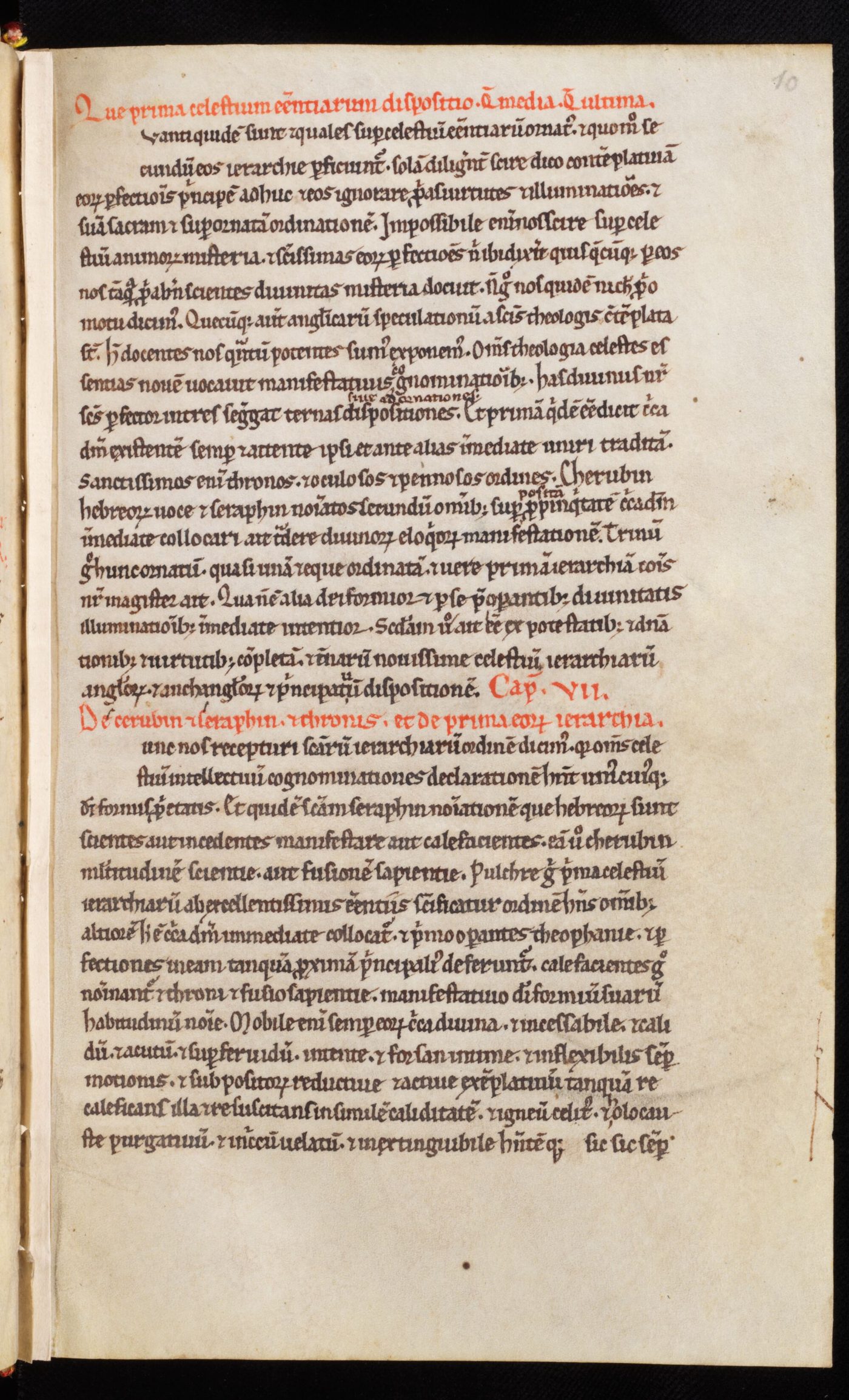
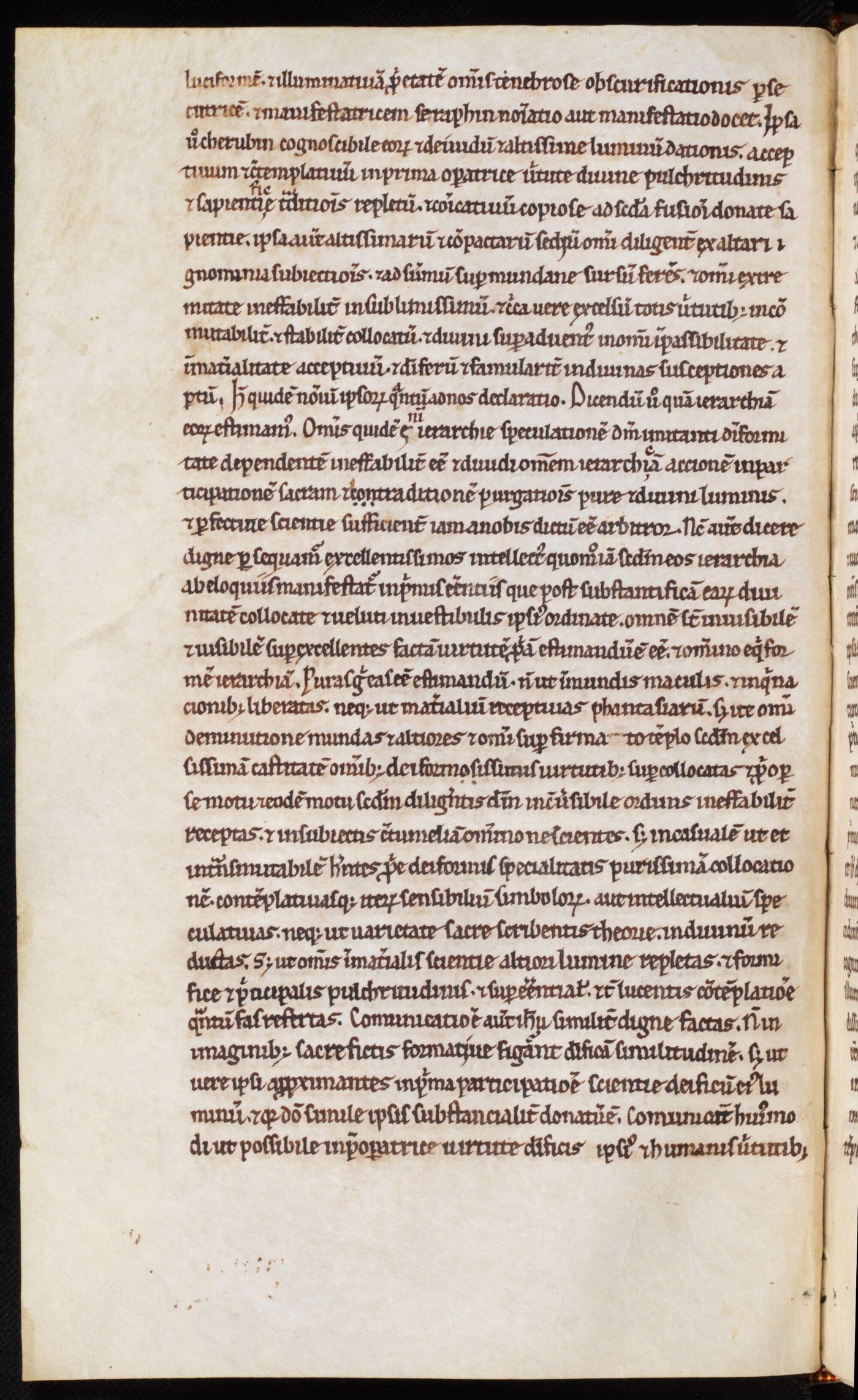
- The Basel manuscript leaves, with their red rubrics
- Parker’s 1894 English for comparison on chapter VII
About the author
The author wrote under the name of Dionysius the Areopagite, the Athenian who heard Paul (Acts 17:34). Scholars date the writings to about AD 500; the author’s real name is unknown. John Scottus Eriugena (c. 815–c. 877), an Irish scholar, translated them into Latin about 860.
- Author
- Dionysius the Areopagite (c. 500)
- Greek
- Migne, Patrologia Graeca vol. 3 (Paris, 1857), public domain; Aegean Digital Patrology transcription (2006)
- Chapter VII also from
- Latin of John Scottus Eriugena (c. 860), Basel, Universitätsbibliothek, O III 5, ff. 10r–10v
- Compared with
- On chapter VII, John Parker’s English, 1894. The new chapters are House English from the Greek, not Parker.
- Licence
- Migne 1857 public domain; manuscript images CC0 1.0 (e-codices); Parker 1894 public domain; Aegean transcription © 2006 University of the Aegean, free use with attribution. House translation © 2026 Ruezal Dhragoon.
- Credit
- e-codices; Archive.org scan of Migne PG 3; University of the Aegean Digital Patrology
Chapters
- I. The gift of light from the Father
- II. Unlike symbols of the divine and heavenly things
- III. What hierarchy is, and what use it has
- IV. What the name of the angels means
- V. Why all the heavenly beings are called angels
- VI. The first, middle, and last distinction
- VII. Seraphim, Cherubim, and Thrones (existing Hall House translation)
- VIII. Dominions, Powers, and Authorities
- IX. Principalities, Archangels, and Angels
- X. Recapitulation of the angelic order
- XI. Why all are called heavenly Powers
- XII. Why the hierarchs among men are called angels
- XIII. Why Isaiah is said to have been cleansed by a Seraph
- XIV. The handed-down number of the angels
- XV. The formative images of the angelic powers
Dionysius arranges the angels in three choirs of three. The first and nearest to God are the Seraphim, who burn; the Cherubim, full of knowledge; and the Thrones, who bear God. Eriugena calls the Thrones sedes, “seats”, and deiferi, “God-bearing”.
The Basel leaves