
Hermetic shelf · Corpus Hermeticum · Sermon I
Poemandres, the Shepherd of MenGreek beside Mead’s English
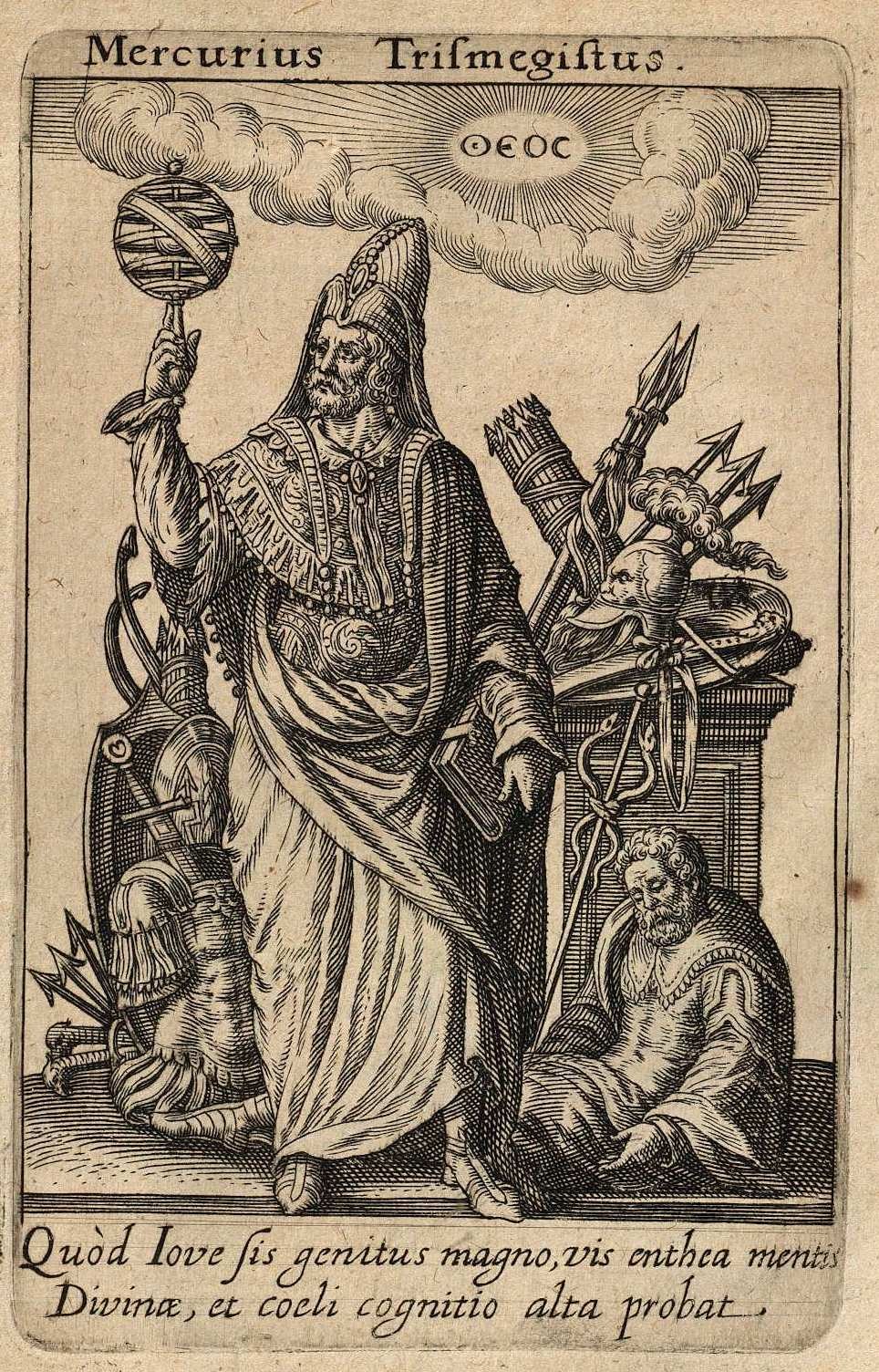
Greek Parthey 1854
English Mead 1906
1. Ἐννοίας μοί ποτε γενομένης περὶ τῶν ὄντων καὶ μετεωρισθείσης μου τῆς διανοίας σφόδρα, κατασχεθεισῶν τε τῶν σωματικῶν μου αἰσθήσεων — καθάπερ οἱ ἐν ὕπνῳ βεβαρημένοι ἐκ κόρου τε καὶ τρυφῆς ἢ ἐκ κόπου σώματος — ἔδοξά τινα ὑπερμεγέθη μέτρῳ ἀπεριορίστῳ τυγχάνοντα καλεῖν μου τὸ ὄνομα καὶ λέγοντά μοι, Τί βούλει ἀκοῦσαι καὶ θεάσασθαι καὶ τί νοήσας· μαθεῖν καὶ γνῶναι;
1. It chanced once on a time my mind was meditating on the things that are, 1 my thought was raised to a great height, the senses of my body being held back—just as men are who are weighed down with sleep after a fill of food, or from fatigue of body.
Methought a Being more than vast, in size beyond all bounds, called out my name and saith: What wouldst thou hear and see, and what hast thou in mind to learn and know?
2. Φημὶ ἐγώ, Σὺ γὰρ τίς εἶ; Ἐγὼ μέν, φησίν, εἰμὶ ὁ Ποιμάνδρης, ὁ τῆς αὐθεντίας νοῦς, οἶδα δὲ ὃ βούλει, καὶ σύνειμί σοι πανταχοῦ.
3. Φημὶ ἐγώ, Μαθεῖν θέλω τὰ ὄντα καὶ νοῆσαι τὴν τούτων φύσιν, καὶ γνῶναι τὸν θεόν. τοῦτ’ ἔφην, ἀκοῦσαι βούλομαι. Φησὶν ἐμοὶ πάλιν, Ἔχε νῷ σῷ ὅσα θέλεις μαθεῖν, κἀγώ σε διδάξω.
3. [And] I reply: I long to learn the things that are, and comprehend their nature, and know God. This is, I said, what I desire to hear.
He answered back to me: Hold in thy mind all thou wouldst know, and I will teach thee.
4. Τοῦτο εἰπὼν ἠλλάγη τῇ ἰδέᾳ, καὶ εὐθέως πάντα μοι ἤνοικτο ῥοπῇ, καὶ ὁρῶ θέαν ἀόριστον, φῶς δὲ πάντα γεγενημένα, εὔδιόν τε καὶ ἱλαρόν· καὶ ἠράσθην ἰδών· καὶ μετ' ὀλίγον σκότος κατωφερὲς ἦν ἐν μέρει γεγενημένον, φοβερόν τε καὶ στυγνόν, σκολιῶς πεπεραμένον· ὡς εἰκάσαι με ἰδόντα μεταβαλλόμενον τὸ σκότος εἰς ὑγρᾶν τινα φύσιν ἀφάτως τεταραγμένην, καὶ καπνὸν ἀποδιδοῦσαν ὡς ἀπὸ πυρός, καί τινα ἦχον ἀποτελοῦσαν ἀνεκλάλητον γοώδη. εἶτα βοὴ ἐξ αὐτῆς ἀσυνάρθρως ἐξεπέμπετο, ὡς εἰκάσαι φωνῇ φωτός.
4. E’en with these words His aspect changed, 4 and straightway, in the twinkling of an eye, all things were opened to me, and I see a Vision limitless, all things turned into Light,—sweet, joyous [Light]. And I became transported as I gazed.
But in a little while Darkness came settling down on part [of it], awesome and gloomy, coiling in sinuous folds, 5 so that methought it like unto a snake. 6
And then the Darkness changed into some sort of a Moist Nature, tossed about beyond all power of words, belching out smoke as from a fire, and groaning forth a wailing sound that beggars all description.
[And] after that an outcry inarticulate came forth from it, as though it were a Voice of Fire.
5. ἐκ τοῦ φωτὸς τις λόγος ἅγιος ἐπέβη τῇ φύσει, καὶ πῦρ ἄκρατον ἐξεπήδησεν ἐκ τῆς ὑγρᾶς φύσεως ἄνω εἰς ὕψος· κοῦφον δὲ ἦν καὶ ὀξύ, δραστικὸν τὲ ἅμα· καὶ ὁ ἀὴρ, ἐλαφρὸς ὢν ἠκολούθησε τῷ πνεύματι, ἀναβαίνοντος αὐτοῦ μέχρι τοῦ πυρὸς ἀπὸ γῆς καὶ ὕδατος, ὡς δοκεῖν κρέμασθαι αὐτὸν ἀπ' αὐτοῦ. γῆ δὲ καὶ ὕδωρ ἔμενε καθ' ἑαυτὰ συμμεμιγμένα, ὡς μὴ θεωρεῖσθαι ἀπὸ τοῦ ὕδατος· κινούμενα δὲ ἦν διὰ τὸν ἐπιφερόμενον πνευματικὸν λόγον εἰς ἀκοήν.
5. [Thereon] out of the Light . . . 7 a Holy Word (Logos) 8 descended on that Nature. And upwards to the height from the Moist Nature leaped forth pure Fire; light was it, swift and active too.
The Air, too, being light, followed after the Fire; from out the Earth-and-Water rising up to Fire so that it seemed to hang therefrom.
But Earth-and-Water stayed so mingled each with other, that Earth from Water no one could discern. 9 Yet were they moved to hear by reason of the Spirit-Word (Logos) pervading them.
6. Ὁ δὲ Ποιμάνδρης ἐμοί, Ἐνόησας, φησί, τὴν θέαν ταύτην ὅτι καὶ βούλεται; Καὶ γνώσομαι, ἔφην ἐγώ. Τὸ φῶς ἐκεῖνο, ἔφη, ἐγώ εἰμι νοῦς ὁ σὸς θεός, ὁ πρὸ φύσεως ὑγρᾶς τῆς ἐκ σκότους φανείσης· ὁ δὲ ἐκ νοὸς φωτεινὸς λόγος, υἱὸς θεοῦ. Τί οὖν; φημί. Οὕτω γνῶθι· τὸ ἐν σοὶ βλέπον καὶ ἀκοῦον, λόγος κυρίου, ὁ δὲ νοῦς πατὴρ θεός· οὐ γὰρ διίστανται ἀπ' ἀλλήλων· ἕνωσις γὰρ τούτων ἐστὶν ἡ ζωή. Εὐχαριστῶ σοι, ἔφην ἔγω. Ἀλλὰ δὴ νόει τὸ φῶς, καὶ γνώριζε τοῦτο, φησίν.
6. Then saith to me Man-Shepherd: Didst understand this Vision what it means?
Nay; that shall I know, I said.
That Light, He said, am I, thy God, Mind, prior to Moist Nature which appeared from Darkness; the Light-Word (Logos) [that appeared] from Mind is Son of God.
What then?—say I.
Know that what sees in thee 10 and hears is the Lord’s Word (Logos); but Mind is Father-God. Not separate are they the one from other; just in their union [rather] is it Life consists.
Thanks be to Thee, I said.
So, understand the Light [He answered], and make friends with it.
7. Καὶ εἰπὼν ταῦτα ἐπὶ πλείονα χρόνον ἀντώπησέ μοι, ὥστε με τρέμειν αὐτοῦ τὴν ἰδέαν. ἀνανεύσαντος δέ θεωρῶ ἐν τῷ νοΐ μου τὸ φῶς ἐν δυνάμεσιν ἀναριθμήτοις ὄν, καὶ κόσμον ἀπεριόριστον γεγενημένον, καὶ περισχέσθαι τὸ πῦρ δυνάμει μεγίστῃ, καὶ στάσιν ἐσχηκέναι κρατούμενον. ταῦτα δὲ ἐγὼ διενοήθην ὁρῶν διὰ τὸν τοῦ Ποιμάνδρου λόγον.
7. And speaking thus He gazed for long into my eyes, 11 so that I trembled at the look of Him.
But when He raised His head, I see in Mind the Light, [but] now in Powers no man could number, and Cosmos 12 grown beyond all bounds, and that the Fire was compassed round about by a most mighty Power, and [now] subdued had come unto a stand.
And when I saw these things I understood by reason of Man-Shepherd’s Word (Logos).
8. Ὡς δὲ ἦν ἐν ἐκπλήξει φησὶ πάλιν ἐμοί, Εἶδες ἐν τῷ νῷ τὸ ἀρχέτυπον εἶδος τὸ προϋπάρχον τῆς ἀρχῆς τῆς ἀπεράντου. ταῦτα ὁ Ποιμάνδρης ἐμοί. Τὰ οὖν, ἐγώ φημι, στοιχεῖα τῆς φύσεως πόθεν ὑπέστη; Πάλιν ἐκεῖνος πρὸς ταῦτα, Ἐκ βουλῆς θεοῦ, ἥτις λαβοῦσα τὸν λόγον, καὶ ἰδοῦσα τὸν καλὸν κόσμον, ἐμιμήσατο, κοσμοποιηθεῖσα διὰ τῶν ἑαυτῆς στοιχείων καὶ γεννημάτων ψυχῶν.
8. But as I was in great astonishment, He saith to me again: Thou didst behold in Mind the Archetypal Form whose being is before beginning without end. Thus spake to me Man-Shepherd.
And I say: Whence then have Nature’s elements their being?
To this He answer gives: From Will of God.
[paragraph continues] [Nature 13] received the Word (Logos), and gazing on the Cosmos Beautiful 14 did copy it, making herself into a cosmos, by means of her own elements and by the births of souls.
9. ὁ δὲ νοῦς ὁ θεός, ἀρρενόθηλυς ὤν, ζωὴ καὶ φῶς ὑπάρχων, ἀπεκύησε λόγῳ ἕτερον νοῦν δημιουργόν, ὃς θεὸς τοῦ πυρὸς καὶ πνεύματος ὤν ἐδημιούργησε διοικητάς τινας ἑπτά, ἐν κύκλοις περιέχοντας τὸν αἰσθητὸν κόσμον. καὶ ἡ διοίκησις αὐτῶν εἱμαρμένη καλεῖται.
10. Ἐπήδησεν εὐθὺς ἐκ τῶν κατωφερῶν στοιχείων ὁ τοῦ θεοῦ λόγος εἰς τὸ καθαρὸν τῆς φύσεως δημιούργημα, καὶ ἡνώθη τῷ δημιουργῷ νῷ· ὁμοούσιος γὰρ ἦν. καὶ κατελείφθη τὰ ἄλογα τὰ κατωφερῆ τῆς φύσεως στοιχεῖα, ὡς εἶναι ὕλην μόνην.
11. ὁ δὲ δημιουργὸς νοῦς σὺν τῷ λόγῳ, ὁ περιέχων τοὺς κύκλους καὶ δινῶν ῥοίζῳ, ἔστρεψε τὰ ἑαυτοῦ δημιουργήματα, καὶ εἴασε στρέφεσθαι ἀπ' ἀρχῆς ἀορίστου εἰς ἀπέραντον τέλος. ἄρχεται γάρ, οὗ λήγει. ἡ δὲ τούτων περιφορά, καθὼς θέλει ὁ νοῦς, ἐκ τῶν κατωφερῶν στοιχείων ζῶα ἤνεγκεν ἄλογα· οὐ γὰρ ἐπεῖχε τὸν λόγον· ἀὴρ δὲ πετεινὰ ἤνεγκε, καὶ τὸ ὕδωρ νηκτά· διακεχώρισται δὲ ἀπ' ἀλλήλων ἥ τε γῆ καὶ τὸ ὕδωρ, καθὼς ἠθέλησεν ὁ νοῦς, καὶ ἡ γῆ ἐξήνεγκεν ἀπ' αὐτῆς ἃ εἶχε ζῷα τετράποδα, ἑρπετά, θηρία ἄγρια καὶ ἥμερα.
11. Then the Formative Mind ([at-oned] with Reason), he who surrounds the spheres and spins them with his whirl, set turning his formations, and let them turn from a beginning boundless unto an endless end. For that the circulation of these [spheres] begins where it doth end, as Mind doth will.
And from the downward elements Nature brought forth lives reason-less; for He did not extend the Reason (Logos) [to them]. The Air brought forth things winged; the Water things that swim, and Earth-and-Water one from another parted, as Mind willed. And from her bosom Earth produced what lives she had, four-footed things and reptiles, beasts wild and tame.
12. Ὁ δὲ πάντων πατὴρ ὁ νοῦς, ὢν ζωὴ καὶ φῶς, ἀπεκύησεν ἄνθρωπον ἑαὐτῷ ἴσον, οὗ ἠράσθη ὡς ἰδίου τόκου· περικαλλὴς γάρ, τὴν τοῦ πατρὸς εἰκόνα ἔχων. ὄντως γὰρ καὶ ὁ θεὸς ἠράσθη τῆς ἰδίας μορφῆς, καὶ αὐτῇ παρέδωκε τὰ ἑαυτοῦ πάντα δημιουργήματα.
12. But All-Father Mind, being Life and Light, did bring forth Man 20 co-equal to Himself, with whom He fell in love, as being His own child; for he was beautiful beyond compare, the Image of his Sire. In very truth, God fell in love with His own Form 21; and on him did bestow all of His own formations.
13. κατανοήσας δὲ τὴν τοῦ δημιουργοῦ κτίσιν ἐν τῷ πατρί, ἠβουλήθη καὶ αὐτὸς δημιουργεῖν. καὶ ἀπεχωρίσθη ἀπὸ τοῦ πατρός, γενόμενος ἐν τῇ δημιουργικῇ σφαίρᾳ· ἔχων τὴν πᾶσαν ἐξουσίαν κατενόησε τῶν ἀδελφῶν τὰ δημιουργήματα. οἱ δὲ ἠράσθησαν αὐτοῦ· ἕκαστος δὲ μετεδίδου τῆς ἰδίας τάξεως. καὶ καταμαθὼν τὴν τούτων οὐσίαν, καὶ μεταλαβὼν τῆς αὐτῶν φύσεως ἠβουλήθη ἀναρρῆξαι τὴν περιφέρειαν τῶν κύκλων, καὶ τὸ κράτος τοῦ ἐπικειμένου ἐπὶ τοῦ πυρὸς καταπονῆσαι.
13. And when he gazed upon what the Enformer had created in the Father, [Man] too wished to enform; and [so] assent was given him by the Father. 22
Changing his state to the formative sphere, 23 in that he was to have his whole authority, 24 he gazed upon his Brother’s creatures. 25 They fell in love with him, and gave him each a share of his own ordering. 26
And after that he had well-learned their essence and had become a sharer in their nature, he had a mind to break right through the Boundary of their spheres, and to subdue 27 the might of that which pressed upon the Fire. 28
14. Καὶ ὁ τῶν θνητῶν τοῦ κόσμου ζώων καὶ τῶν ἀλόγων ἔχων πᾶσαν ἐξουσίαν διὰ τῆς ἁρμονίας παρέκυψεν, ἀναρρήξας τὸ κράτος τῶν κύκλων, καὶ ἔδειξε τῇ κατωφερεῖ φύσει τὴν καλὴν τοῦ θεοῦ μορφὴν. ἣν ἰδοῦσα ἀκόρεστον κάλλος· καὶ πᾶσαν ἐνέργειαν ἐν ἑαυτῇ ἔχουσαν τῶν ἑπτὰ διοικητόρων, τήν τε μορφὴν τοῦ θεοῦ, ἐμειδίασεν ἔρωτι, ἅτε τῆς καλλίστης μορφῆς τοῦ ἀνθρώπου τὸ εἶδος ἐν τῷ ὕδατι ἰδοῦσα, καὶ τὸ σκίασμα ἐπὶ τῆς γῆς. ὁ δὲ ἰδὼν τὴν ὁμοίαν αὐτῷ μορφὴν, ἐν ἑαυτῷ οὖσαν, ἐν τῷ ὕδατι, ἐφίλησε καὶ ἠβουλήθη αὐτῇ συνοικεῖν· ἅμα δὲ τῇ βουλῇ ἐγένετο ἐνέργεια, καὶ ἐκύησε τὴν ἄλογον μορφήν.
14. So he who hath the whole authority o’er [all] the mortals in the cosmos and o’er its lives irrational, bent his face downwards through 29 the Harmony, 30 breaking right through its strength, and showed to downward Nature God’s fair Form.
And when she saw that Form of beauty which can never satiate, and him who [now] possessed within himself each single energy of [all seven] Rulers as well as God’s [own] Form, she smiled with love; for ’twas as though she’d seen the image of Man’s fairest form upon her Water, his shadow on her Earth.
He in his turn beholding the form like to himself, existing in her, in her Water, loved it and willed to live in it; and with the will came act, 31 and [so] he vivified the form devoid of reason.
And Nature took the object of her love and wound herself completely round him, and they were intermingled, for they were lovers.
15. ἡ δὲ φύσις λαβοῦσα τὸν ἐρώμενον περιεπλάκη ὅλη καὶ ἐμίγησαν· ἐρώμενοι γὰρ ἦσαν. καὶ διὰ τοῦτο παρὰ πάντα τὰ ἐπὶ γῆς ζῶα διπλοῦς ἐστιν ὁ ἄνθρωπος, θνητὸς μὲν διὰ τὸ σῶμα, ἀθάνατος δὲ διὰ τὸν οὐσιώδη ἄνθρωπον. ἀθάνατος γὰρ ὢν καὶ πάντων τὴν ἐξουσίαν ἔχων, τὰ θνητὰ πάσχει ὑποκείμενα τῇ εἱμαρμένῃ. ὑπεράνω οὖν ὢν τῆς ἁρμονίας, ἐναρμόνιος γέγονε δοῦλος. ἀρρενόθηλυς δὲ ὤν, ἐξ ἀρρενοθήλεος ὢν πατρὸς, καὶ ἄϋπνος ἀπὸ ἀΰπνου κρατεῖται.
15. And this is why beyond all creatures on the earth man is twofold; mortal because of body, but because of the essential Man immortal.
Though deathless and possessed of sway o’er all, yet doth he suffer as a mortal doth, subject to Fate.
Thus though above the Harmony, within the Harmony he hath become a slave. Though male-female, 32 as from a Father male-female, and though he’s sleepless from a sleepless [Sire], yet is he overcome [by sleep].
16. Καὶ μετὰ ταῦτα νοῦς ὁ ἐμός, Καὶ αὐτὸς γὰρ ἐρῶ τοῦ λόγου. Ὁ δὲ Ποιμάνδρης εἶπε, Τοῦτό ἐστι τὸ κεκρυμμένον μυστήριον μέχρι τῆσδε τῆς ἡμέρας. ἡ γὰρ φύσις ἐπιμιγεῖσα τῷ ἀνθρώπῳ ἤνεγκέ τι θαῦμα θαυμασιώτατον. ἔχοντος γὰρ αὐτοῦ τῆς ἁρμονίας τῶν ἑπτὰ τὴν φύσιν, οὓς ἔφην σοι, ἐκ πυρὸς καὶ πνεύματος, οὐκ ἀνέμενεν ἡ φύσις, ἀλλ' εὐθὺς ἀπεκύησεν ἑπτὰ ἀνθρώπους, πρὸς τὰς φύσεις τῶν ἑπτὰ διοκητόρων ἀρρενοθήλεας καὶ μεταρσίους. Καὶ μετὰ ταῦτα, Ὦ Ποιμάνδρη, εἰς μεγάλην γὰρ νῦν ἐπιθυμίαν ἦλθον, καὶ ποθῶ ἀκοῦσαι. μὴ ἔκτρεχε. Καὶ ὁ Ποιμάνδρης εἶπεν, Ἀλλὰ σιώπα· οὔπω γάρ σοι ἀνήπλωσα τὸν πρῶτον λόγον. Ἰδοὺ σιωπῶ, ἔφην ἐγώ.
16. Thereon [I say: Teach on], 33 O Mind of me, for I myself as well 34 am amorous of the Word (Logos).
The Shepherd said: This is the mystery kept hid until this day.
Nature embraced by Man brought forth a wonder, oh so wonderful. For as he had the nature of the Concord 35 of the Seven, who, as I said to thee, [were made] of Fire and Spirit 36—Nature delayed not, but immediately brought forth seven “men,” in correspondence with the natures of the Seven, male-female and moving in the air. 37
Thereon [I said]: O Shepherd, . . . 38; for now I’m filled with great desire and long to hear; do not run off. 39
The Shepherd said: Keep silence, for not as yet have I unrolled for thee the first discourse (logos).
Lo! I am still, I said.
17. Ἐγένετο οὖν, ὡς ἔφην, τῶν ἑπτὰ τούτων ἡ γένεσις τοιῷδε τρόπῳ. θηλυκὸν γὰρ ὁ ἀήρ, καὶ ὕδωρ ὀχευτικόν. τὸ δὲ ἐκ πυρὸς πέπειρον, ἐκ δὲ αἰθέρος τὸ πνεῦμα ἔλαβε. καὶ ἐξήνεγκεν ἡ φύσις τὰ σώματα πρὸς τὸ εἶδος τοῦ ἀνθρώπου. ὁ δὲ ἄνθρωπος ἐκ ζωῆς καὶ φωτὸς ἐγένετο εἰς ψυχὴν καὶ νοῦν, ἐκ μὲν ζωῆς εἰς ψυχήν, ἐκ δὲ φωτὸς εἰς νοῦν. καὶ ἔμεινεν οὕτω τὰ πάντα μέλη τοῦ αἰσθητοῦ κόσμου μέχρι περιόδου τέλους ἀρχῶν καὶ γενῶν.
17. In such wise then, as I have said, the generation of these seven came to pass. Earth was as woman, her Water filled with longing; ripeness she took from Fire, spirit from Æther. Nature thus brought forth frames to suit the form of Man.
And Man from Life and Light changed into soul and mind,—from Life to soul, from Light to mind.
And thus continued all the sense-world’s parts 40 until the period of their end and new beginnings.
18. ἄκουε λοιπόν, ὃν ποθεῖς λόγον ἀκοῦσαι. τῆς περιόδου πεπληρωμένης ἐλύθη ὁ πάντων σύνδεσμος ἐκ βουλῆς θεοῦ. πάντα γὰρ τὰ ζῷα ἀρρενοθήλεα ὄντα διελύετο ἅμα τῷ ἀνθρώπῳ, καὶ ἐγένετο τὰ μὲν ἀρρενικὰ ἐν μέρει, τὰ δὲ θηλυκὰ ὁμοίως. ὁ δὲ θεὸς εὐθὺς εἶπεν ἁγίῳ λόγῳ, αὐξάνεσθε ἐν αὐξήσει καὶ πληθύνεσθε ἐν πλήθει, πάντα τὰ κτίσματα καὶ δημιουργήματα· καὶ ἀναγνωρισάτω ὁ ἔννους ἑαυτὸν ὄντα ἀθάνατον καὶ τὸν αἴτιον τοῦ θανάτου ἔρωτα σώματος, καὶ πάντα τὰ ὄντα.
18. Now listen to the rest of the discourse (logos) which thou dost long to hear.
The period being ended, the bond that bound them all was loosened by God’s Will. For all the animals being male-female, at the same time with man were loosed apart; some became partly male, some in like fashion [partly] female. And straightway God spake by His Holy Word (Logos):
“Increase ye in increasing, and multiply in multitude, ye creatures and creations all; and man that hath Mind in him, let him learn to know that he himself is deathless, and that the cause of death is love, 41 though Love is all.” 42
19. Τοῦτο εἰπόντος, ἡ πρόνοια διὰ τῆς εἱμαρμένης καὶ ἁρμονίας τὰς μίξεις ἐποιήσατο καὶ τὰς γενέσεις κατέστησε. καὶ ἐπληθύνθη κατὰ γένος τὰ πάντα. καὶ ὁ ἀναγνωρίσας ἑαυτὸν ἐλήλυθεν εἰς τὸ περιούσιον ἀγαθόν, ὁ δὲ ἀγαπήσας τὸ ἐκ πλάνης ἔρωτος σῶμα, οὗτος μένει ἐν τῷ σκότει πλανώμενος, αἰσθητῶς πάσχων τὰ τοῦ θανάτου.
19. When He said this, His Forethought 43 did by means of Fate and Harmony effect their couplings and their generations founded. And so all things were multiplied according to their kind.
And he who thus hath learned to know himself, hath reached that Good which doth transcend abundance; but he who through a love that leads astray, expends his love upon his body,—
he stays in Darkness wandering, 44 and suffering through his senses things of Death.
20. Τί τοσοῦτον ἁμαρτάνουσιν, ἔφην ἐγώ, οἱ ἀγνοοῦντες, ἵνα στερηθῶσι τῆς ἀθανασίας; Ἔοικας, φησίν, ὦ οὗτος, μὴ πεφροντικέναι ὧν ἤκουσας. οὐκ ἔφην σοι νοεῖν; Νοῶ, ἔφην, καὶ μιμνήσκομαι· εὐχαριστῶ δὲ ἅμα σοί. Εἰ ἐνόησας, φησίν, εἰπέ μοι, διὰ τί ἄξιοί εἰσι τοῦ θανάτου οἱ ἐν τῷ θανάτῳ ὄντες. Ὅτι προκατάρχεται, φημί, τοῦ οἰκείου σώματος τὸ στυγνὸν σκότος, ἐξ οὗ ἡ ὑγρὰ φύσις, ἐξ ἧς τὸ σῶμα συνέστηκεν ἐν τῷ αἰσθητῷ κόσμῳ, ἐξ οὗ θάνατος ἀρδεύεται.
20. What is the so great fault, said I, the ignorant commit, that they should be deprived of deathlessness?
Thou seem’st, he said, O thou, not to have given heed to what thou heardest. Did not I bid thee think? Yea do I think, and I remember, and therefore give Thee thanks.
If thou didst think [thereon], [said He], tell me: Why do they merit death who are in Death?
It is because the gloomy Darkness is the root and base of the material frame; from it 45 came the Moist Nature; from this 46 the body in the sense-world was composed; and from this [body] Death doth the Water drain.
21. Ἐνόησας ὀρθῶς, ὦ οὗτος. κατὰ τί δὲ ὁ ἐννοήσας ἑαυτὸν εἰς θεὸν χωρεῖ, ὅπερ ἔφη ὁ τοῦ θεοῦ λόγος; Φημὶ ἐγώ ὅτι Ἐκ φωτὸς καὶ ζωῆς συνέστηκεν ὁ πατὴρ τῶν ὅλων, ἐξ οὗ γέγονεν ὁ ἄνθρωπος. Εὐφήμει λαλῶν, φησί, φῶς καὶ ζωή ἐστιν ὁ θεὸς καὶ πατήρ, ἐξ οὗ ἐγένετο ὁ ἄνθρωπος. ἐὰν οὖν μάθῃς σεαυτὸν ἐκ ζωῆς καὶ φωτὸς ὄντα, καὶ ὅτι ἐκ τούτων τυγχάνεις, εἰς ζωὴν πάλιν χωρήσεις. ταῦτα ὁ Ποιμάνδρης εἶπεν. Ἀλλ’ ἔτι ἔφην ἐγώ, εἰπέ μοι, πῶς εἰς ζωὴν χωρήσω, ὦ νοῦς; Ἐμός φησὶν ὁ θεός, Ὁ ἔννους ἄνθρωπος ἀναγνωρισάτω ἑαυτόν. Οὐ πάντες, φημί, οὖν ἄνθρωποι νοῦν ἔχουσιν;
21. Right was thy thought, O thou! But how doth “he who knows himself, go unto Him,” as God’s Word (Logos) hath declared?
And I reply: the Father of the universals doth consist of Light and Life, and from Him Man was born.
Thou sayest well, [thus] speaking. Light and Life is Father-God, and from Him Man was born.
If then thou learnest that thou art thyself of [paragraph continues] Life and Light, and that thou [only] happen’st to be out of them, thou shalt return again to Life. Thus did Man-Shepherd speak.
But tell me further, Mind of me, I cried, how shall I come to Life again . . . . for God doth say: “The man who hath Mind in him, let him learn to know that he himself [is deathless].”
22. Εὐφήμει, ὦ οὗτος, τοιαῦτα λαλῶν. παραγίνομαι αὐτὸς ἐγὼ ὁ νοῦς τοῖς ὁσίοις καὶ ἀγαθοῖς καὶ καθαροῖς καὶ ἐλεήμοσι, τοῖς εὐσεβῶς βιοῦσι. καὶ ἡ παρουσία μου γίνεται βοήθεια, καὶ εὐθὺς τὰ πάντα γνωρίζουσι καὶ τὸν πατέρα ἱλάσκονται ἀγαπητικῶς, καὶ εὐχαριστοῦσιν εὐλογοῦντες καὶ ὑμνοῦσι τεταγμένοι πρὸς αὐτὸν τῇ στοργῇ· καὶ πρὸ τοῦ παραδοῦναι τὸ σῶμα ἰδίῳ θανάτῳ μυσάττονται τὰς αἰσθήσεις εἰδότες αὐτῶν τὰ ἐνεργήματα· μᾶλλον δὲ οὐκ ἐάσω αὐτὸς ὁ νοῦς τὰ προσπίπτοντα ἐνεργήματα τοῦ σώματος ἐκτελεσθῆναι· πυλωρὸς γὰρ ὢν ἀποκλείσω τὰς εἰσόδους τῶν κακῶν καὶ αἰσχρῶν ἐνεργημάτων τὰς ἐνθυμήσεις ἐκκόπτων.
22. Have not all men then Mind?
Thou sayest well, O thou, thus speaking. I, Mind, myself am present with holy men and good, the pure and merciful, men who live piously.
[To such] my presence doth become an aid, and straightway they gain gnosis of all things, and win the Father’s love by their pure lives, and give Him thanks, invoking on Him blessings, and chanting hymns, intent on Him with ardent love.
And ere they give the body up unto its proper death, they turn them with disgust from its sensations, from knowledge of what things they operate. 47 Nay, it is I, the Mind, that will not let the operations which befall the body, work to their [natural] end. For being door-keeper I’ll close up [all] the entrances, and cut the mental actions off which base and evil energies induce.
23. τοῖς δὲ ἀνοήτοις καὶ κακοῖς καὶ πονηροῖς καὶ φθονεροῖς καὶ πλεονέκταις καὶ φονεῦσι καὶ ἀσεβέσι πόρρωθέν εἰμι, τῷ τιμωρῷ ἐκχωρήσας δαίμονι, ὅστις τὴν ὀξύτητα τοῦ πυρὸς προσβάλλων θρώσκει αὐτοὺς αἰσθητικῶς, καὶ μᾶλλον ἐπὶ τὰς ἀνομίας αὐτοὺς ὁπλίζει, ἵνα τύχωσι μείζονος τιμωρίας· καὶ οὐ παύεται ἐπ' ὀρέξεις ἀπλέτους τὴν ἐπιθυμίαν αὐτῶν κινῶν ἀκορέστως ὡς ἐν σκοτομαχίᾳ· καὶ οὕτω βασανίζει, καὶ ἐπ' αὐτοὺς πῦρ ἐπὶ τὸ πλεῖον αὐξάνει.
23. But to the Mind-less ones, the wicked and depraved, the envious and covetous, and those who murder do and love impiety, I am far off, yielding my place to the Avenging Daimon, who sharpening the fire, tormenteth him and addeth fire to fire upon him, and rusheth on him through his senses, thus rendering him the readier for transgressions of the law, so that he meets with greater torment; nor doth he ever cease to have desire for appetites inordinate, insatiately striving in the dark. 48
24. Εὖ με πάντα, ἔφην, ὡς ἐβουλόμην, ἐδίδαξας, ὦ νοῦς. ἔτι δέ μοι εἰπὲ περὶ τῆς ἀνόδου τῆς γινομένης. Πρὸς ταῦτα ὁ Ποιμάνδρης εἷπε, Πρῶτον μὲν ἐν τῇ ἀναλύσει τοῦ σώματος τοῦ ὑλικοῦ παραδίδωσιν αὐτὸ τὸ σῶμα εἰς ἀλλοίωσιν, καὶ τὸ εἶδος ὃ εἶχες, ἀφανὲς γίνεται. καὶ τὸ ἦθος τῷ δαίμονι ἀνενέργητον παραδίδωσι, καὶ αἱ αἰσθήσεις τοῦ σώματος εἰς τὰς ἑαυτῶν πηγὰς ἐπανέρχονται μέρη γινόμεναι, καὶ πάλιν συνιστάμεναι εἰς τὰς ἐνεργείας. καὶ ὁ θυμὸς καὶ ἡ ἐπιθυμία εἰς τὴν ἄλογον φύσιν χωρεῖ.
24. Well hast thou taught me all, as I desired, O Mind. And now, pray, tell me further of the nature of the Way Above as now it is [for me]. 49
To this Man-Shepherd said: When thy material body is to be dissolved, first thou surrenderest the body by itself unto the work of change, and thus the form thou hadst doth vanish, and thou surrenderest thy way of life, 50 void of its energy, unto the Daimon. 51 The body’s senses next pass back into their sources, becoming separate, and resurrect as energies; and passion and desire 52 withdraw unto that nature which is void of reason.
25. καὶ οὕτως ὁρμᾷ λοιπὸν ἄνω διὰ τῆς ἁρμονίας, καὶ τῇ πρώτῃ ζώνῃ δίδωσι τὴν αὐξητικὴν ἐνέργειαν καὶ τὴν μειωτικήν, καὶ τῇ δευτέρᾳ τὴν μηχανὴν τῶν κακῶν, καὶ τὸν δόλον ἀνενέργητον, καὶ τῇ τρίτῃ τὴν ἐπιθυμητικὴν ἀπάτην ἀνενέργητον, καὶ τῇ τετάρτῃ τὴν ἀρχοντικὴν ὑπεριφανίαν ἀπλεονέκτητον, καὶ τῇ πέμπτῃ τὸ θράσος τὸ ἀνόσιον καὶ τῆς τόλμης τὴν προπέτειαν, καὶ τῇ ἕκτῃ τὰς ἀφορμὰς τὰς κακὰς τοῦ πλούτου ἀνενεργήτους, καὶ τῇ ἑβδόμῃ ζώνῃ τὸ ἐνεδρεῦον ψεῦδος.
25. And thus it is that man doth speed his way thereafter upwards through the Harmony.
To the first zone he gives the Energy of Growth and Waning; unto the second [zone], Device of Evils [now] de-energized 53; unto the third, the Guile of the Desires de-energized; unto the fourth, his Domineering Arrogance, [also] de-energized; unto the fifth, unholy Daring and the Rashness of Audacity, de-energized; unto the sixth, Striving for Wealth by evil means, deprived of its aggrandisement; and to the seventh zone, Ensnaring Falsehood, de-energized. 54
26. καὶ τότε γυμνωθεὶς ἀπὸ τῶν τῆς ἁρμονίας ἐνεργημάτων γίνεται ἐπὶ τὴν ὀγδοατικὴν φύσιν τὴν ἰδίαν δύναμιν ἔχων, καὶ ὑμνεῖ σὺν τοῖς οὖσι τὸν πατέρα. συγχαίρουσι δὲ οἱ παρόντες τῇ τούτου παρουσίᾳ, καὶ ὁμοιωθεὶς τοῖς συνοῦσιν ἀκούει καί τῶν δυνάμεων ὑπὲρ τὴν ὀγδοατικὴν φύσιν οὐσῶν φωνῇ τινι ἡδείᾳ ὑμνουσῶν τὸν θεόν. καὶ τότε τάξει ἀνέρχονται πρὸς τὸν πατέρα, καὶ αὐτοὶ εἰς δυνάμεις ἑαυτοὺς παραδιδόασι, καὶ δυνάμεις γενόμενοι ἐν θεῷ γίνονται. τοῦτό ἐστι τὸ ἀγαθὸν τέλος τοῖς γνῶσιν ἐσχηκόσι, θεωθῆναι. λοιπόν, τί μέλλεις; οὐχ ὡς πάντα παραλαβὼν καθοδηγὸς γίνῃ τοῖς ἀξίοις, ὅπως τὸ γένος τῆς ἀνθρωπότητος διὰ σοῦ ὑπὸ θεοῦ σωθῇ;
26. And then, with all the energizings of the Harmony stript from him, clothed in his proper Power, he cometh to that Nature which belongs unto the Eighth, 55 and there with those-that-are hymneth the Father.
They who are there welcome his coming there with joy; and he, made like to them that sojourn there, doth further hear the Powers who are above the Nature that belongs unto the Eighth, singing their songs of praise to God in language of their own.
And then they, in a band, 56 go to the Father home; of their own selves they make surrender of themselves to Powers, and [thus] becoming Powers they are in God. This the good end for those who have gained Gnosis—to be made one with God.
Why shouldst thou then delay? Must it not be, since thou hast all received, that thou shouldst to the worthy point the way, in order that through thee the race of mortal kind may by [thy] God be saved?
27. Ταῦτα εἰπὼν ὁ Ποιμάνδρης ἐμοὶ ἐμίγη ταῖς δυνάμεσιν. ἐγὼ δὲ εὐχαριστήσας καὶ εὐλογήσας τὸν πατέρα τῶν ὅλων ἀνέστην ὑπ' αὐτοῦ δυναμωθεὶς καὶ διδαχθεὶς τοῦ παντὸς τὴν φύσιν καὶ τὴν μεγίστην θέαν· καὶ ἦργμαι κηρύσσειν τοῖς ἀνθρώποις τὸ τῆς εὐσεβείας καὶ τὸ τῆς γνώσεως κάλλος. Ὦ λαοί, ἄνδρες γηγενεῖς, οἱ μέθῃ καὶ ὕπνῳ ἑαυτοὺς ἐκδεδωκότες καὶ τῇ ἀγνωσίᾳ τοῦ θεοῦ, νήψατε, παύσασθε κραιπαλῶντες, θελγόμενοι ὕπνῳ ἀλόγῳ.
27. This when He’d said, Man-Shepherd mingled with the Powers. 57
But I, with thanks and blessings unto the Father of the universal [Powers], was freed, full of the power He had poured into me, and full of what He’d taught me of the nature of the All and of the loftiest Vision.
And I began to preach to men the Beauty of Devotion and of Gnosis:
O ye people, earth-born folk, ye who have given yourselves to drunkenness and sleep and ignorance of God, be sober now, cease from your surfeit, cease to be glamoured by irrational sleep 58!
28. Οἱ δὲ ἀκούσαντες παρεγένοντο ὁμοθυμαδόν. ἐγὼ δέ φημι, Τί ἑαυτούς, ὦ ἄνδρες γηγενεῖς, εἰς θάνατον ἐκδεδώκατε ἔχοντες ἐξουσίαν τῆς ἀθανασίας μεταλαβεῖν; μετανοήσατε οἱ συνοδεύσαντες τῇ πλάνῃ καὶ συγκοινωνήσαντες τῇ ἀγνοίᾳ, ἀπαλλάγητε τοῦ σκοτεινοῦ φωτός, μεταλάβετε τῆς ἀθανασίας, καταλείψαντες τὴν φθοράν.
28. And when they heard, they came with one accord. Whereon I say:
Ye earth-born folk, why have ye given up yourselves to Death, while yet ye have the power of sharing Deathlessness? Repent, O ye, who walk with Error arm in arm and make of Ignorance the sharer of your board; get ye from out the light of Darkness, and take your part in Deathlessness, forsake Destruction!
29. Καὶ οἱ μὲν αὐτῶν καταφλυαρήσαντες ἀπέστησαν τῇ τοῦ θανάτου ὁδῷ ἑαυτοὺς ἐκδεδωκότες, οἱ δὲ παρεκάλουν διδαχθῆναι, ἑαυτοὺς πρὸ ποδῶν μου ῥίψαντες. ἐγὼ δὲ ἀναστήσας αὐτοὺς καθοδηγὸς ἐγενόμην τοῦ γένους τοῦ ἀνθρωπίνου, τοὺς λόγους διδάσκων, πῶς καὶ τίνι τρόπῳ σωθήσονται. καὶ ἔσπειρα αὐτοῖς τοὺς τῆς σοφίας λόγους καὶ ἐτράφησαν ἐκ τοῦ ἀμβροσίου ὕδατος. ὀψίας δὲ γενομένης καὶ τῆς τοῦ ἡλίου αὐγῆς ἀρχομένης δύεσθαι ὅλης ἐκέλευσα αὐτοῖς εὐχαριστεῖν τῷ θεῷ. καὶ ἀναπληρώσαντες τὴν εὐχαριστίαν ἕκαστος ἐτράπη εἰς τὴν ἰδίαν κοίτην.
29. And some of them with jests upon their lips 59 departed [from me], abandoning themselves unto the Way of Death; others entreated to be taught, casting themselves before my feet.
But I made them arise, and I became a leader of the Race 60 towards home, teaching the words (logoi), how and in what way they shall be saved. I sowed in them the words (logoi) of wisdom 61; of Deathless Water were they given to drink. 62
And when even was come and all sun’s beams began to set, I bade them all give thanks to God. And when they had brought to an end the giving of their thanks, each man returned to his own resting place.
30. ἐγὼ δὲ τὴν εὐεργεσίαν τοῦ Ποιμάνδρου ἀνεγραψάμην εἰς ἐμαυτόν, καὶ πληρωθεὶς ὧν ἤθελον ἐξηυφράνθην. ἐγένετο γὰρ ὁ τοῦ σώματος ὕπνος τῆς ψυχῆς νῆψις, καὶ ἡ κάμμυσις τῶν ὀφθαλμῶν ἀληθινὴ ὅρασις, καὶ ἡ σιωπή μου ἐγκύμων τοῦ ἀγαθοῦ, καὶ ἡ τοῦ λόγου ἐκφορὰ γεννήματα ἀγαθῶν. τοῦτο δὲ συνέβη μοι λαβόντι ἀπὸ τοῦ νοός μου, τουτ’ έστι τοῦ Ποιμάνδρου τοῦ τῆς αὐθεντίας λόγου, ὅθεν θεόπνους γενόμενος τῆς ἀληθείας ἦλθον. διὸ δίδωμι ἐκ ψυχῆς καὶ ἰσχύος ὅλης εὐλογίαν τῷ πατρὶ θεῷ.
30. But I recorded in my heart Man-Shepherd’s benefaction, and with my every hope fulfilled more than rejoiced. For body’s sleep became the soul’s awakening, 63 and closing of the eyes—true vision, pregnant with Good my silence, and the utterance of my word (logos) begetting of good things.
All this befell me from my Mind, that is Man-Shepherd, Word (Logos) of all masterhood, 64 by whom being God-inspired I came unto the Plain of Truth. 65 Wherefore with all my soul and strength thanksgiving 66 give I unto Father-God.
31. Ἅγιος ὁ θεὸς ὁ πατὴρ τῶν ὅλων· ἅγιος ὁ θεὸς, οὗ ἡ βουλὴ τελεῖται ἀπὸ τῶν ἰδίων δυνάμεων· ἅγιος ὁ θεός, ὃς γνωσθῆναι βούλεται καὶ γινώσκεται τοῖς ἰδίοις· ἅγιος εἶ, ὁ λόγῳ συστησάμενος τὰ ὄντα· ἅγιος εἶ, οὗ πᾶσα φύσις εἰκὼν ἔφυ· ἅγιος εἶ, ὃν ἡ φύσις οὐκ ἐμόρφωσεν· ἅγιος εἶ, ὁ πάσης δυνάμεως ἰσχυρότερος· ἅγιος εἶ, ὁ πάσης ὑπεροχῆς μείζων· ἅγιος εἶ, ὁ κρείττων τῶν ἐπαίνων· δέξαι λογικὰς θυσίας ἁγνὰς ἀπὸ ψυχῆς καὶ καρδίας πρὸς σὲ ἀνατεταμένης, ἀνεκλάλητε, ἄρρητε, σιωπῇ φωνούμενε.
31. Holy art Thou, O God, the universals’ Father.
Holy art Thou, O God, whose Will perfects itself by means of its own Powers.
Holy art Thou, O God, who willeth to be known and art known by Thine own.
Holy art Thou, who didst by Word (Logos) make to consist the things that are.
Holy art Thou, of whom All-nature hath been made an Image.
Holy art Thou, whose Form Nature hath never made.
Holy art Thou, more powerful than all power.
Holy art Thou, transcending all pre-eminence.
Holy Thou art, Thou better than all praise.
Accept my reason’s 67 offerings pure, from soul and heart for aye stretched up to Thee, O Thou unutterable, unspeakable, Whose Name naught but the Silence can express.
32. αἰτουμένῳ τὸ μὴ σφαλῆναι τῆς γνώσεως τῆς κατ' οὐσίαν ἡμῶν ἐπίνευσόν μοι, καὶ ἐνδυνάμωσόν με, καὶ τῆς χάριτος ταύτης φώτισον τοὺς ἐν ἀγνοίᾳ τοῦ γένους μοῦ ἀδελφούς, υἱοὺς δὲ σοῦ. διὸ πιστεύω σοι καὶ μαρτυρῶ, εἰς ζωὴν καὶ φῶς χωρῶ. εὐλογητὸς εἶ, πάτερ· ὁ σὸς ἄνθρωπος συναγιάζειν σοι βούλεται, καθὼς παρέδωκας αὐτῷ τὴν πᾶσαν ἐξουσίαν.
32. Give ear to me who pray that I may ne’er of Gnosis fail, [Gnosis] which is our common Being’s nature 68; and fill me with Thy Power, and with this Grace [of Thine], that I may give the Light to those in ignorance of the Race, my Brethren, and Thy Sons.
For this cause I believe, and I bear witness; I go to Life and Light. Blessed art Thou, O Father. Thy Man 69 would holy be as Thou art holy, e’en as Thou gavest him Thy full authority 70 [to be].
Mead’s notes
- περὶ τῶν ὄντων. ↩
- Ποιμάνδρης. ↩
- ὁ τῆς αὐθεντίας νοῦς. The αὐθεντία was the summa potestas of all things; see R. 8, n. 1; and § 30 below. Cf. also C. H., xiii. (xiv.) 15. ↩
- ἠλλάγη τῇ ἰδέᾳ. ↩
- σκολιῶς ἐσπειραμένον. The sense is by no means certain. Ménard translates “de forme sinueuse”; Everard, “coming down obliquely”; Chambers, “sinuously terminated.” But cf. in the Sethian system “the sinuous Water—that is, Darkness (see Hipp., Philos., v. 19). ↩
- Cf. Hipp., Philos., v. 9 (S. 170, 71): “They say the Serpent is the Moist Essence.” ↩
- A lacuna of six letters in the text. ↩
- The idea of the Logos was the central concept of Hellenistic theology; it was thus a word of many meanings, signifying chiefly Reason and Word, but also much else. I have accordingly throughout added the term Logos after the English equivalent most suitable to the context. ↩
- Cf. Il., vii. 99, as quoted by Apion in the chapter “Concerning the Æon” as Comment, on C. H., xi. (xii.). ↩
- That is, in vision. ↩
- Cf. C. H., xi (xii) 6. ↩
- κόσμον. The word kosmos (world-order) means either “order” or “world”; and in the original there is frequently a play upon the two meanings, as in the case of logos. ↩
- Nature and God’s Will are identical. ↩
- That is, the ideal world-order in the realms of reality. ↩
- Presumably the Pure Air of § 3. ↩
- τὸν αἰσθητὸν κόσμον. The sensible or manifested world, our present universe, as distinguished from the ideal eternal universe, the type of all universes. ↩
- εἱμαρμένη. ↩
- The Logos which had previously descended into Nature. ↩
- ὁμοούσιος, usually translated “consubstantial”; but οὐσία is “essence” and “being” rather than “substance.” ↩
- The Prototype, Cosmic, Ideal or Perfect Man. ↩
- Or Beauty (μορφῆς). ↩
- Cf. The Gospel of Mary in the Akhmīm Codex: “He nodded, and when He had thus nodded assent . . . .” (F. F. F., 586). ↩
- The Eighth Sphere bounding the Seven. ↩
- For note on ἐξουσία, see R. in loc. and 48, n. 3. ↩
- That is the Seven Spheres fashioned by his Brother. ↩
- τάξις, rank or order. ↩
- Or “wear down” (καταπονῆσαι). The reading κατανοῆσαι, however, may be more correct; “he had a mind to come to knowledge of” this Boundary or Ring Pass not. See R. 49, n. 1. ↩
- Sc. the Mighty Power of § 9. ↩
- παρέκυψεν. Cf. Cyril, C. J., i. 33 (Frag. xiii.); R. 50: “beugt sich . . . nieder” But compare especially Plato, Phædrus, 249 C., where he speaks of the soul “raising up her face (ἀνακύψασα) to That which is.” Cf. also Apion in Clement. Hom., vi. 4, in Comment. C. H., xi. (xii.) ↩
- That is, the harmonious interplay, concord or system of the spheres ruled by the Rulers; in other words, the cosmos of Fate. ↩
- ἐνέργεια, energy, and realization. ↩
- That is “a-sexual” but having the potentiality of both sexes. ↩
- For the various suggestions for filling up this lacuna, see R. in loc.; and for that of Keil, see R. 367. ↩
- Sc. as well as Nature. ↩
- Harmony. ↩
- See § 9. ↩
- μεταρσίους. A term that must have a more definite meaning than the vague “sublime” by which it is generally translated. ↩
- For Keil’s completion of the lacuna, see R. 368. ↩
- μὴ ἔκτρεχε, perhaps meaning diverge from the subject, or go too fast; lit., it means “do not run away.” ↩
- That is, the parts of what Hermes elsewhere calls the “cosmic man.” ↩
- Cf. C. H., xvi. 16. ↩
- Omitting the τἀ before ὄντα. ↩
- πρόνοια, that is Nature as Sophia or Providence or Will. ↩
- There is a word-play between πλάνης and πλανώμενος. ↩
- Sc. Darkness. ↩
- Sc. The Moist Nature. ↩
- εἰδότες αὐτῶν τὰ ἐνεργήματα. ↩
- The text of this paragraph is hopelessly confused in the MSS. ↩
- περὶ τῆς ἀνόδου τῆς γινομένης. ↩
- τὸ ἦθος, the “habitual” part of man, presumably way of life impressed by habit on the body; or it may be “class” of life as in the Vision of Er. ↩
- Cf. C. H., x. (xi.) 16. ↩
- ὁ θυμὸς καὶ ἡ ἐπιθυμία,—the masculine and feminine as positive and negative aspects of the “animal soul.” ↩
- ἀνενέργητον. ↩
- Cf. C. H., xiii. (xiv.) 7. ↩
- Cf. C. H., xiii. (xiv.) 15. ↩
- τάξει, order, group, sc. of the Nine;—the Father being the Ten, or consummation. ↩
- Cf. K. K., 25: “Thus speaking God became Imperishable Mind.” ↩
- Cf. the logos, “Jesus saith, I stood in the midst of the world, and in the flesh was I seen of them, and I found all men drunken, and none found I athirst among them, and my soul grieveth over the sons of men, because they are blind in heart.” Sayings of Our Lord from an Early Greek Papyrus, Grenfell & Hunt (London; 1897). ↩
- Cf. P. S. A., xii. 2. ↩
- The Race of the Logos, of all who were conscious of the Logos in their hearts, who had repented and were thus logoi. ↩
- Cf. Mark iv. 4: “He who soweth soweth the Word (Logos)” ↩
- Cf. K. K., 1—the drink given by Isis to Horus. ↩
- νῆψις, lit. soberness, watchfulness, lucidity. ↩
- See § 2 above. ↩
- Cf. K. K. (Stob., Ec., i. 49; p. 459, 20, W.), and Damascius, in Phot., Bibl., p. 337b, 23. ↩
- εὐλογίαν,—a play on λόγος. ↩
- λογικάς. ↩
- τῆς γνώσεως τῆς κατ᾽ οὐσίαν ἡμῶν, “our being,” that is, presumably, the “being” of man and God, the “being” which man shares with God. ↩
- Cf. C. H., xiii. (xiv.) 20. ↩
- ἐξουσίαν. ↩
English: G. R. S. Mead, Thrice-Greatest Hermes, vol. II (London, 1906), public domain, text via the Internet Sacred Text Archive; footnotes are Mead’s. Greek: Gustav Parthey, Hermetis Trismegisti Poemander (Berlin, 1854), public domain, via Greek Wikisource. Editorial additions printed as angle brackets in that transcription are shown as 〈 〉. In this book, Sermons II–VII and X use the same Parthey edition, from their Greek Wikisource pages. Sermons VIII, IX, XI–XIV and XVI–XVIII have no Greek yet; see the book index.