
Hermetic shelf · Greek, 1st–3rd century AD
Corpus HermeticumThe sermons of Thrice-Greatest Hermes, in G. R. S. Mead’s English, with Parthey’s Greek beside I–VII and X
Public domain. The Greek Hermetic sermons, written in Roman Egypt in the first to third centuries AD, in G. R. S. Mead’s English of 1906, numbered as in the Corpus (there is no Sermon XV). Sermons I–VII and X have the Greek beside the English, section by section, from Parthey’s edition of 1854, via Greek Wikisource. Sermons VIII, IX and XI–XIV are in Parthey’s printed book, but no usable public-domain digital Greek is given (the Wikisource transcription does not yet cover those pages, and the Internet Archive OCR of the 1854 scan is unreadable). Sermons XVI–XVIII are not in Parthey; they are given in English only. Mead’s notes follow each sermon. Short House notes mark places where Mead’s English departs from this Greek.
The sermons
- I Poemandres, the Shepherd of Men Greek beside
- II To Asclepius Greek beside
- III The Sacred Sermon Greek beside
- IV The Cup or Monad Greek beside
- V Though Unmanifest God Is Most Manifest Greek beside
- VI In God Alone Is Good and Elsewhere Nowhere Greek beside
- VII The Greatest Ill among Men Is Ignorance of God Greek beside
- VIII That No One of Existing Things Doth Perish
- IX On Thought and Sense
- X The Key Greek beside
- XI Mind unto Hermes
- XII About the Common Mind
- XIII The Secret Sermon on the Mountain
- XIV A Letter of Thrice-Greatest Hermes to Asclepius
- XVI The Definitions of Asclepius unto King Ammon
- XVII Of Asclepius to the King
- XVIII The Encomium of Kings
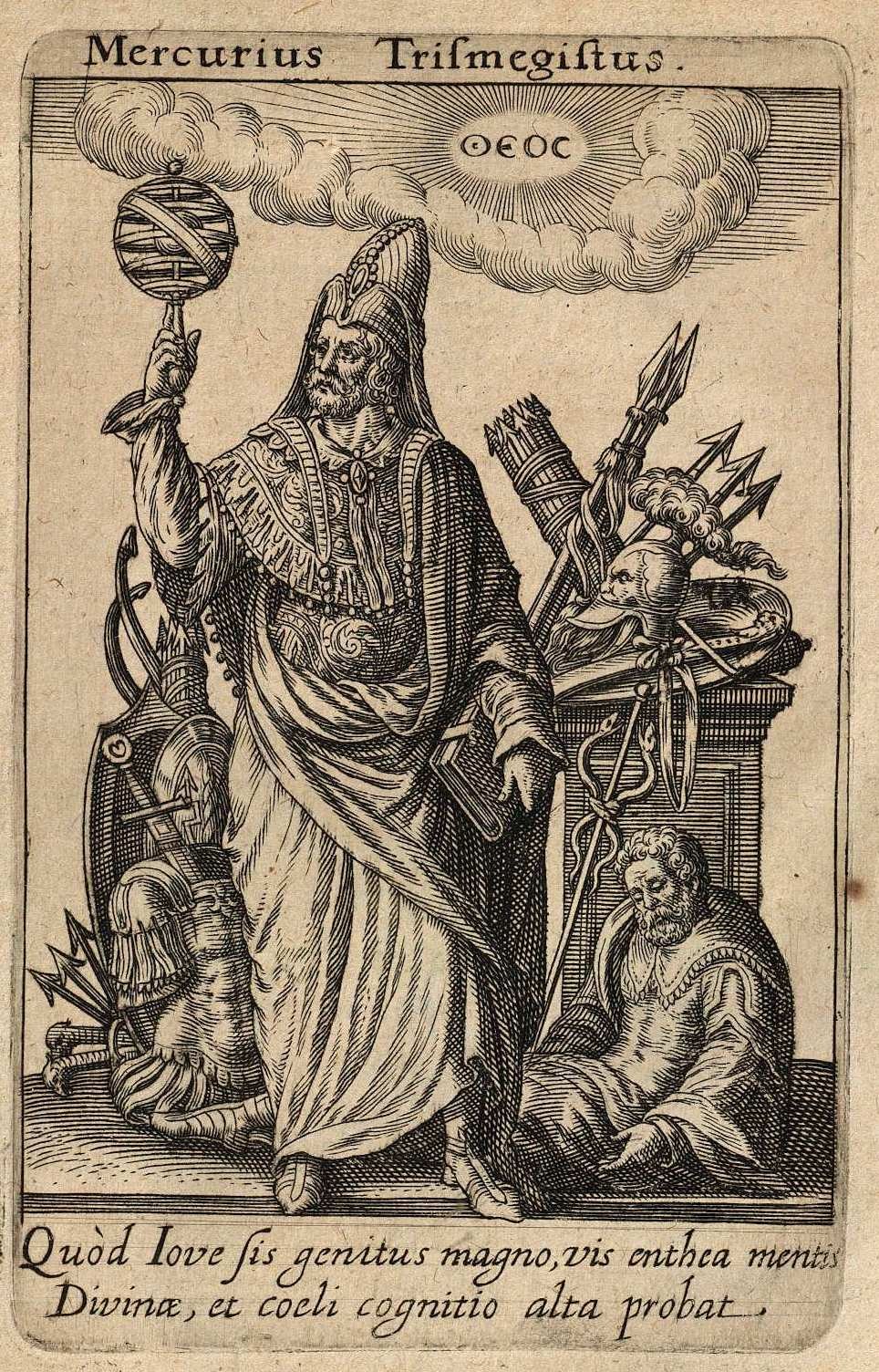
The Hermetic pictures, free to download
English: G. R. S. Mead, Thrice-Greatest Hermes, vol. II (London, 1906), public domain, text via the Internet Sacred Text Archive; footnotes are Mead’s. Greek of Sermons I–VII and X: Gustav Parthey, Hermetis Trismegisti Poemander (Berlin, 1854), public domain, via Greek Wikisource (the same edition already used for the live Sermon I). The 1854 scan is at Internet Archive, poemander00trisgoog. Sermons VIII, IX, XI–XIV and XVI–XVIII have no Greek yet.