
Chinese shelf · Shan Hai Jing · Book 3 of 18
北山經 · The Classic of the Northern MountainsChinese with Guo Pu’s notes where the Hall has them, and a facing House English
The Chinese is the Hall’s public-domain text. The facing English is a House translation written from that Chinese on 26 November 2026. Uncertain readings are marked in the line and listed in UNCERTAIN.md.



Chinese Siku Quanshu text, Hall wording
北山經之首
北山經之首,曰單狐之山,多机木,其上多華草。漨水出焉,而西流注于泑水,其中多茈石文石。
又北二百五十里,曰求如之山,其上多銅,其下多玉,無草木。滑水出焉,而西流注于諸毗之水。其中多滑魚。其狀如鱓,赤背,其音如梧,食之已疣。其中多水馬,其狀如馬,文臂牛尾,其音如呼。
又北三百里,曰帶山,其上多玉,其下多青碧。有獸焉,其狀如馬,一角有錯,其名曰䑏疏,可以辟火。有鳥焉,其狀如烏,五采而赤文,名曰鵸䳜,是自爲牝牡,食之不疽。彭水出焉,而西流注于芘湖之水,其中多儵魚,其狀如鶏而赤毛,三尾六足四首,其音如鵲,食之可以已憂。
又北四百里,曰譙明之山。譙水出焉,西流注于河。其中多何羅之魚,一首而十身,其音如吠犬,食之已癰。有獸焉,其狀如貆而赤豪,其音如榴榴,名曰孟槐,可以禦凶。是山也,無草木,多青雄黃。
又北三百五十里,曰涿光之山。嚻水出焉,而西流注于河。其中多鰼鰼之魚,其狀如鵲而十翼,鱗皆在羽端,其音如鵲,可以禦火,食之不癉。其上多松柏,其下多椶枏,其獸多麢羊,其鳥多蕃。
又北三百八十里,曰虢山,其上多漆,其下多桐椐。其陽多玉,其陰多鐵。伊水出焉,西流注于河。其獸多橐駝,其鳥多寓,狀如鼠而鳥翼,其音如羊,可以禦兵。
又北四百里,至于虢山之尾,其上多玉而無石。魚水出焉,西流注于河,其中多文貝。
又北二百里,曰丹熏之山,其上多樗柏,其草多韭䪥,多丹雘。熏水出焉,而西流注于棠水。有獸焉,其狀如鼠,而菟首麋身,其音如獆犬,以其尾飛,名曰耳鼠,食之不䐆,又可以禦百毒。
又北二百八十里,曰石者之山,其上無草木,多瑤碧。泚水出焉,西流注于河。有獸焉,其狀如豹,而文題白身,名曰孟極,是善伏,其鳴自呼。
又北百一十里,曰邊春之山,多蔥、葵、韭、桃、李。杠水出焉,而西流注于泑澤。有獸焉,其狀如禺而文身,善笑,見人則臥,名曰幽鴳,其鳴自呼。
又北二百里,曰蔓聯之山,其上無草木,有獸焉,其狀如禺而有鬛,牛尾、文臂、馬蹏,見人則呼,名曰足訾,其鳴自呼。有鳥焉,群居而朋飛,其毛如雌雉,名曰鵁,其鳴自呼,食之已風。
又北百八十里,曰單張之山,其上無草木。有獸焉,其狀如豹而長尾,人首而牛耳,一目,名曰諸犍,善吒,行則銜其尾。居則蟠其尾。有鳥焉,其狀如雉,而文首、白翼、黃足,名曰白鵺,食之已嗌痛,可以已痸。櫟水出焉,在而南流注于杠水。
又北三百二十里,曰灌題之山,其上多樗柘,其下多流沙,多砥。有獸焉,其狀如牛而白尾,其音如訆,名曰那父。有鳥焉,其狀如雌雉而人面,見人則躍,名曰竦斯,其鳴自呼也。匠韓之水出焉,而西流注于泑澤,其中多磁石。
又北二百里,曰潘侯之山,其上多松柏,其下多榛楛,其陽多玉,其陰多鐵。有獸焉,其狀如牛,而四節生毛,或曰旄牛。邊水出焉,而南流注于櫟澤。
又北二百三十里,曰小咸之山,無草木,冬夏有雪。
北二百八十里,曰大咸之山,無草木,其下多玉。是山也,四方,不可以上。有蛇名曰長蛇,其毛如彘豪,其音如鼓柝。
又北三百二十里,曰敦薨之山,其上多椶枏,其下多茈草。敦薨之水出焉,而西流注于泑澤。出于昆侖之東北隅,實惟河原。其中多赤鮭,其獸多兕,旄牛,其鳥多鳲鳩。
又北二百里,曰少咸之山,無草木,多青碧。有獸焉,其狀如牛,而赤身、人面、馬足,名曰窫窳,其音如嬰兒,是食人。敦水出焉,東流注于鴈門之水,其中多䰽䰽之魚。食之殺人。
又北二百里,曰嶽法之山。瀤澤之水出焉,而東北流注于泰澤。其中多抄魚,其狀如鯉而雞足,食之已疣。有獸焉,其狀如犬而人面,善投,見人則笑,其名山𤟤,其行如風,見則天下大風。
又北二百里,曰北嶽之山,多枳棘剛木。有獸焉,其狀如牛,而四角、人目、彘耳,其名曰諸懷,其音如鳴鴈,是食人。諸懷之水出焉,而西流注于嚻水,其中多鮨魚,魚身而犬首,其音如嬰兒,食之已狂。
又北百八十里,曰渾夕之山,無草木,多銅玉。嚻水出焉,而西北流注于海。有蛇一首兩身,名曰肥遺,見則其國大旱。
又北五十里,曰北單之山,無草木,多蔥韭。
又北百里,曰羆差之山,無草木,多馬。
又北百八十里,曰北鮮之山,是多馬。鮮水出焉,而西北流注于涂吾之水。
又北百七十里,曰隄山,多馬。有獸焉,其狀如豹而文首,名曰狕。隄水出焉,而東流注于泰澤,其中多龍龜。
凡北山經之首,自單狐之山至于隄山,凡二十五山,五千四百九十里,其神皆人面蛇身。其祠之,毛用一雄雞彘瘞,吉玉用一珪,瘞而為不糈。其山北人,皆生食不火之物。
北次二經
《北次二經》之首,在河之東,其首枕汾,其名曰管涔之山。其上無木而多草,其下多玉。汾水出焉,而西流注于河。
又西二百五十里,曰少陽之山,其上多玉,其下多赤銀。酸水出焉,而東流注于汾水,其中多美赭。
又北五十里,曰縣雍之山,其上多玉,其下多銅,其獸多閭麋,其鳥多白翟白䳑。晋水出焉,而東南流注于汾水。其中多鮆魚,其狀如儵而赤麟,其音如叱,食之不騷。
又北二百里,曰狐岐之山,無草木,多青碧。勝水出焉,而東北流注于汾水,其中多蒼玉。
又北三百五十里,曰白沙山,廣員三百里,盡沙也,無草木鳥獸。鮪水出于其上,潜于其下,是多白玉。
又北四百里,曰爾是之山,無草木,無水。
又北三百八十里,曰狂山,無草木,是山也,冬夏有雪。狂水出焉,而西流注于浮水,其中多美玉。
又北三百八十里,曰諸餘之山,其上多銅玉,其下多松柏。諸餘之水出焉,而東流注于旄水。
又北三百五十里,曰敦頭之山,其上多金玉,無草木。旄水出焉,而東流注于印澤。其中多𩣡馬,牛尾而白身,一角,其音如呼。
又北三百五十里,曰鈎吾之山,其上多玉,其下多銅。有獸焉,其狀如羊身人面,其目在腋下,虎齒人爪,其音如嬰兒,名曰狍鴞,是食人。
又北三百里,曰北嚻之山,無石,其陽多碧,其陰多玉。有獸焉,其狀如虎,而白身犬首,馬尾彘鬛,名曰獨𤞞。有鳥焉,其狀如烏,人面,名曰𪄀𪃑,宵飛而晝伏,食之已暍。涔水出焉,而東流注于邛澤。
又北三百五十里,曰梁渠之山,無草木,多金玉。脩水出焉,而東流注于鴈門,其獸多居暨,其狀如彙而赤毛,其音如豚。有鳥焉,其狀如夸父,四翼、一目、犬尾,名曰嚻,其音如鵲,食之已腹痛,可以止衕。
又北四百里,曰姑灌之山,無草木。是山也,冬夏有雪。
又北三百八十里,曰湖灌之山,其陽多玉,其陰多碧,多馬。湖灌之水出焉,而東流注于海,其中多䱇。有木焉,其葉如柳而赤理。
又北水行五百里,流沙三百里,至于洹山,其上多金玉。三桑生之,其樹皆無枝,其高百仞。百果樹生之。其下多怪蛇。
又北三百里,曰敦題之山,無草木,多金玉。是錞于北海。
凡《北次二經》之首,自管涔之山至于敦題之山,凡十七山,五千六百九十里。其神皆蛇身人面。其祠:毛用一雄雞彘瘞;用一璧一珪,投而不糈。
北次三經
《北次三經》之首,曰太行之山。其首曰歸山,其上有金玉,其下有碧。有獸焉,其狀如麢羊而四角,馬尾而有距,其名曰䮝,善還,其名自訆。有鳥焉,其狀如鵲,白身、赤尾、六足,其名曰䴅,是善驚,其鳴自詨。
又東北二百里,曰龍侯之山,無草木,多金玉。决决之水出焉,而東流注于河。其中多人魚,其狀如䱱魚,四足,其音如嬰兒,食之無癡疾。
又東北二百里,曰馬成之山,其上多文石,其陰多金玉。有獸焉,其狀如白犬而黑頭,見人則飛,其名曰天馬,其鳴自訆,有鳥焉,其狀如烏,首白而身青、足黃,是名曰鶌鶋。其名自詨,食之不饑,可以已寓。
又東北七十里,曰咸山,其上有玉,其下多銅,是多松柏,草多茈草。條菅之水出焉,而西南流注于長澤。其中多器酸,三歲一成,食之已癘。
又東北二百里,曰天池之山,其上無草木,多文石。有獸焉,其狀如兔而鼠首,以其背飛,其名曰飛鼠。澠水出焉,潜于其下,其中多黃堊。
又東三百里,曰陽山,其上多玉,其下多金銅。有獸焉,其狀如牛而尾,其頸𦜜,其狀如句瞿,其名曰領胡,其鳴自詨,食之已狂。有鳥焉,其狀如雌雉,而五采以文,是自爲牝牡,名曰象蛇,其鳴自詨。留水出焉,而南流注于河。其中有䱤父之魚,其狀如鮒魚,魚首而彘身,食之已嘔。
又東三百五十里,曰賁聞之山,其上多蒼玉,其下多黃堊,多涅石。
又北百里,曰王屋之山,是多石。㶌水出焉,而西北流注于泰澤。
又東北三百里,曰教山,其上多玉而無石。教水出焉,西流注于河,是水冬乾而夏流,實惟乾河。其中有兩山。是山也,廣員三百步,其名曰發丸之山,其上有金玉。
又南三百里,曰景山,南望鹽販之澤,北望少澤。其上多草、藷藇,其草多秦椒,其陰多赭,其陽多玉。有鳥焉,其狀如蛇,而四翼、六目、三足,名曰酸與,其鳴自詨,見則其邑有恐。
又東南三百二十里,曰孟門之山,其上多蒼玉,多金,其下多黃堊,多涅石。
又東南三百二十里,曰平山。平水出于其上,潜于其下,是多美玉。
又東二百里,曰京山,有美玉,多漆木,多竹,其陽有赤銅,其陰有玄䃤。高水出焉,南流注于河。
又東二百里,曰虫尾之山,其上多金玉,其下多竹,多青碧。丹水出焉,南流注于河。薄水出焉,而東南流注于黃澤。
又東三百里,曰彭毗之山,其上無草木,多金玉,其下多水。蚤林之水出焉,東南流注于河。肥水出焉,而南流注于牀水,其中多肥遺之蛇。
又東百八十里,曰小侯之山。明漳之水出焉,南流注于黃澤。有鳥焉,其狀如烏而白文,名曰鴣𪄶,食之不灂。
又東三百七十里,曰泰頭之山。共水出焉,南流注于虖池。其上多金玉,其下多竹箭。
又東北二百里,曰軒轅之山,其上多銅,其下多竹。有鳥焉,其狀如梟而白首,其名曰黃鳥,其鳴自詨,食之不妒。
又北二百里,曰謁戾之山,其上多松柏,有金玉。沁水出焉,南流注于河。其東有林焉,名曰丹林。丹林之水出焉,南流注于河。嬰侯之水出焉,北流注于汜水。
東三百里,曰沮洳之山,無草木,有金玉。濝水出焉,南流注于河。
又北三百里,曰神囷之山,其上有文石,其下有白蛇,有飛蟲。黃水出焉,而東流注于洹。滏水出焉,而東流注于歐水。
又北二百里,曰發鳩之山,其上多柘木。有鳥焉,其狀如烏,文首、白喙、赤足,名曰精衛,其鳴自詨。是炎帝之少女,名曰女娃,女娃游于東海,溺而不返,故為精衛,常銜西山之木石,以堙于東海。漳水出焉,東流注于河。
又東北百二十里,曰少山,其上有金玉,其下有銅。清漳之水出焉,東流注于濁漳之水。
又東北二百里,曰錫山,其上多玉,其下有砥。牛首之水出焉,而東流注于滏水。
又北二百里,曰景山,有美玉。景水出焉,東南流注于海澤。
又北百里,曰題首之山,有玉焉,多石,無水。
又北百里,曰繡山,其上有玉、青碧,其木多栒,其草多芍藥、芎藭。洧水出焉,而東流注于河,其中有鱯、黽。
又北百二十里,曰松山,陽水出焉,東北流注于河。
又北百二十里,曰敦與之山,其上無草木,有金玉。溹水出于其陽,而東流注于泰陸之水;泜水出于其陰,而東流注于彭水。槐水出焉,而東流注于泜澤。
又北百七十里,曰柘山,其陽有金玉,其陰有鐵。歷聚之水出焉,而北流注于洧水。
又北三百里,曰維龍之山,其上有碧玉,其陽有金,其陰有鐵。肥水出焉,而東流注于皋澤,其中多礨石。敞鐵之水出焉,而北流注于大澤。
又北百八十里,曰白馬之山,其陽多石玉,其陰多鐵,多赤銅。木馬之水出焉,而東北流注于虖沱。
又北二百里,曰空桑之山,無草木,冬夏有雪。空桑之水出焉,東流注于虖沱。
又北三百里,曰泰戲之山,無草木,多金玉。有獸焉,其狀如羊,一角一目,目在耳後,其名曰䍶䍶,其鳴自訆。虖沱之水出焉,而東流注于漊水。液女之水出于其陽,南流注于沁水。
又北三百里,曰石山,多藏金玉。濩濩之水出焉,而東流注于虖沱;鮮于之水出焉,而南流注于虖沱。
又北二百里,曰童戎之山。皋塗之水出焉,而東流注于漊液水。
又北三百里,曰高是之山。滋水出焉,而南流注于虖沱。其木多椶,其草多條。滱水出焉,東流注于河。
又北三百里,曰陸山,多美玉。𨜰水出焉,而東流注于河。
又北二百里,曰沂山,般水出焉,而東流注于河。
北百二十里,曰燕山,多嬰石。燕水出焉,東流注于河。
又北山行五百里,水行五百里,至于饒山。是無草木,多瑤碧,其獸多橐駞,其鳥多鶹。歷虢之水出焉,而東流注于河,其中有師魚,食之殺人。
又北四百里,曰乾山,無草木,其陽有金玉,其陰有鐵而無水。有獸焉,其狀如牛而三足,其名曰獂,其鳴自詨。
又北五百里,曰倫山。倫水出焉,而東流注于河。有獸焉,其狀如麋,其州在尾上,其名曰羆。
又北五百里,曰碣石之山。繩水出焉,而東流注于河,其中多蒲夷之魚。其上有玉,其下多青碧。
又北水行五百里,至于鴈門之山,無草木。
又北水行四百里,至于泰澤。其中有山焉,曰帝都之山,廣員百里,無草木,有金玉。
又北五百里,曰錞于毋逢之山,北望鶏號之山,其風如䬅。西望幽都之山,浴水出焉。是有大蛇,赤首白身,其音如牛,見則其邑大旱。
凡《北次三經》之首,自太行之山以至于無逢之山,凡四十六山,萬二千三百五十里。其神狀皆馬身而人面者廿神。其祠之,皆用一藻珪瘞之。其十四神狀皆彘身而載玉。其祠之,皆玉,不瘞。其十神狀皆彘身而八足蛇尾。其祠之,皆用一璧瘞之。大凡四十四神,皆用稌糈米祠之。此皆不火食。
右北經之山志,凡八十七山,二萬三千二百三十里。
English House translation, 26 Nov 2026
The first of the Classic of the Northern Mountains (北山經) is called Shanhu Mountain (單狐之山). Many ji-trees (机木); above it, much flowering grass. The Feng Water (漨水) issues from it and flows west to empty into the You Water (泑水); in it there are many zi-stones (茈石) and marked stones.
Again north two hundred and fifty li, it is called Qiuru Mountain (求如之山). Above it, much copper; below it, much jade; no plants or trees. The Hua Water (滑水) issues from it and flows west to empty into the Zhupi Water (諸毗之水). In it there are many hua-fish (滑魚), shaped like the shan (鱓), with a red back; their sound is like the wu (梧); if one eats them, it ends warts. In it there are many water-horses, shaped like a horse, with marked arms and an ox’s tail; their sound is like a shout.
Again north three hundred li, it is called Dai Mountain (帶山). Above it, much jade; below it, much green jasper. There is a beast there, shaped like a horse, with one horn that has a file (有錯); its name is Huanshu (䑏疏); it can be used to ward off fire. There is a bird there, shaped like a crow, five-coloured with red markings; its name is Qitu (鵸䳜); it is male and female of itself; if one eats it, one is free of ju-sores (疽). The Peng Water (彭水) issues from it and flows west to empty into the Pihu Water (芘湖之水); in it there are many tiao-fish (儵魚), shaped like a chicken but with red hair, three tails, six legs and four heads; their sound is like a magpie; if one eats them, it can be used to end sorrow.
Again north four hundred li, it is called Qiaoming Mountain (譙明之山). The Qiao Water (譙水) issues from it and flows west to empty into the He (河). In it there are many Heluo fish (何羅之魚), one head and ten bodies; their sound is like a barking dog; if one eats them, it ends yong-abscesses (癰). There is a beast there, shaped like a huan (貆) but with red bristles; its sound is like liuliu; its name is Menghuai (孟槐); it can be used to fend off the unlucky. This mountain: no plants or trees; much green realgar.
Again north three hundred and fifty li, it is called Zhuoguang Mountain (涿光之山). The Xiao Water (嚻水) issues from it and flows west to empty into the He (河). In it there are many xixi-fish (鰼鰼之魚), shaped like a magpie but with ten wings; the scales are all at the feather-tips; their sound is like a magpie; they can be used to fend off fire; if one eats them, one is free of dan (癉). Above it, many pines and cypresses; below it, many zong (椶) and nan (枏); its beasts are many ling-sheep (麢羊); its birds are many fan (蕃).
Again north three hundred and eighty li, it is called Guo Mountain (虢山). Above it, much lacquer; below it, much tong (桐) and ju (椐). Its south face, much jade; its north face, much iron. The Yi Water (伊水) issues from it and flows west to empty into the He (河). Its beasts are many camels (橐駝); its birds are many yu (寓), shaped like a rat but with a bird’s wings; their sound is like a sheep; they can be used to fend off weapons.
Again north four hundred li, one reaches the tail of Guo Mountain (虢山). Above it, much jade and no stone. The Yu Water (魚水) issues from it and flows west to empty into the He (河); in it there are many marked cowries.
Again north two hundred li, it is called Danxun Mountain (丹熏之山). Above it, many chu (樗) and cypress; its plants are many chives and xie (䪥); much cinnabar-huo (丹雘). The Xun Water (熏水) issues from it and flows west to empty into the Tang Water (棠水). There is a beast there, shaped like a rat, but with a hare’s head and a mi-deer’s body; its sound is like a hao-dog (獆犬); it flies by means of its tail; its name is the ear-rat (耳鼠); if one eats it, one is free of cai (䐆); it can also be used to fend off the hundred poisons.
Again north two hundred and eighty li, it is called Shizhe Mountain (石者之山). Above it, no plants or trees; much yao and jasper. The Zi Water (泚水) issues from it and flows west to empty into the He (河). There is a beast there, shaped like a leopard, but with a marked forehead and a white body; its name is Mengji (孟極); it is good at crouching; its call is its own name.
Again north one hundred and ten li, it is called Bianchun Mountain (邊春之山). Many onions, sunflowers, chives, peaches and plums. The Gang Water (杠水) issues from it and flows west to empty into the You Marsh (泑澤). There is a beast there, shaped like a yu (禺) but with a marked body, good at laughing; if it sees a person it lies down; its name is Youyan (幽鴳); its call is its own name.
Again north two hundred li, it is called Manlian Mountain (蔓聯之山). Above it, no plants or trees. There is a beast there, shaped like a yu (禺) but with a mane, an ox’s tail, marked arms, and a horse’s hoofs; if it sees a person it calls out; its name is Zuzi (足訾); its call is its own name. There is a bird there; they live in flocks and fly as companions; their feathers are like a hen-pheasant’s; its name is Jiao (鵁); its call is its own name; if one eats it, it ends wind.
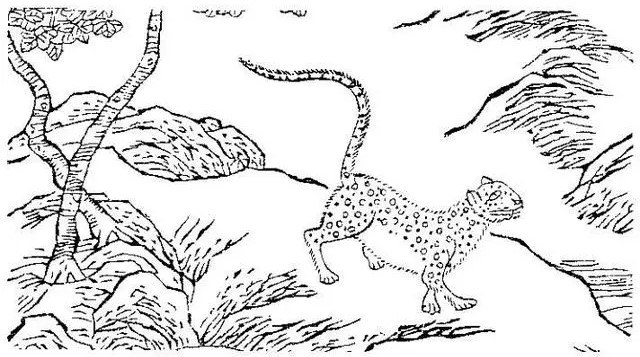
Again north one hundred and eighty li, it is called Shanzhang Mountain (單張之山). Above it, no plants or trees. There is a beast there, shaped like a leopard but with a long tail, a human head and ox ears, one eye; its name is Zhujian (諸犍); it is good at shouting; when it walks it holds its tail in its mouth; when it dwells it coils its tail. There is a bird there, shaped like a pheasant, but with a marked head, white wings and yellow feet; its name is Baiye (白鵺); if one eats it, it ends pain of the throat (嗌); it can be used to end chi (痸). The Li Water (櫟水) issues from it, and, being there, flows south to empty into the Gang Water (杠水).
Again north three hundred and twenty li, it is called Guanti Mountain (灌題之山). Above it, many chu (樗) and zhe (柘); below it, much flowing sand, many whetstones (砥). There is a beast there, shaped like an ox but with a white tail; its sound is like a shout (訆); its name is Nafu (那父). There is a bird there, shaped like a hen-pheasant but with a human face; if it sees a person it leaps; its name is Songsi (竦斯); its call is its own name. The Jianghan Water (匠韓之水) issues from it and flows west to empty into the You Marsh (泑澤); in it there is much lodestone.
Again north two hundred li, it is called Panhou Mountain (潘侯之山). Above it, many pines and cypresses; below it, many zhen (榛) and hu (楛); its south face, much jade; its north face, much iron. There is a beast there, shaped like an ox, but with hair growing at the four joints; or it is called a yak-ox (旄牛). The Bian Water (邊水) issues from it and flows south to empty into the Li Marsh (櫟澤).
Again north two hundred and thirty li, it is called Xiaoxian Mountain (小咸之山). No plants or trees; there is snow in winter and summer.
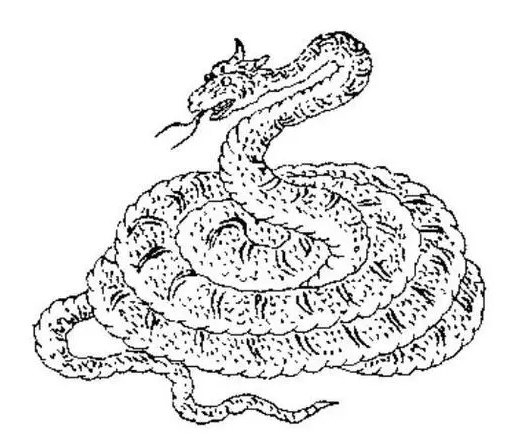
North two hundred and eighty li, it is called Daxian Mountain (大咸之山). No plants or trees; below it, much jade. This mountain is four-square; one cannot go up it. There is a snake named the Long Snake (長蛇); its hair is like a swine’s bristles; its sound is like beating a watch-clapper.
Again north three hundred and twenty li, it is called Dunhong Mountain (敦薨之山). Above it, many zong (椶) and nan (枏); below it, much zi-grass (茈草). The Dunhong Water (敦薨之水) issues from it and flows west to empty into the You Marsh (泑澤). It comes forth from the northeast corner of Kunlun; this is in truth the source of the He (河原). In it there are many red gui (赤鮭); its beasts are many si (兕) and yak-oxen; its birds are many shijiu (鳲鳩).
Again north two hundred li, it is called Shaoxian Mountain (少咸之山). No plants or trees; much green jasper. There is a beast there, shaped like an ox, but with a red body, a human face and a horse’s feet; its name is Yayu (窫窳); its sound is like an infant’s; it eats people. The Dun Water (敦水) issues from it and flows east to empty into the Yanmen Water (鴈門之水); in it there are many peipei-fish (䰽䰽之魚). If one eats them, they kill a person.
Again north two hundred li, it is called Yuefa Mountain (嶽法之山). The Huaize Water (瀤澤之水) issues from it and flows northeast to empty into the Tai Marsh (泰澤). In it there are many chao-fish (抄魚), shaped like a carp but with a chicken’s feet; if one eats them, it ends warts. There is a beast there, shaped like a dog but with a human face, good at throwing; if it sees a person it laughs; its name is Mountain Hui (山𤟤); its going is like the wind; if it appears, the world under heaven has a great wind.
Again north two hundred li, it is called Beiyue Mountain (北嶽之山). Many zhi (枳), thorns, and hard trees. There is a beast there, shaped like an ox, but with four horns, a human’s eyes and a swine’s ears; its name is Zhuhuai (諸懷); its sound is like a crying wild goose; it eats people. The Zhuhuai Water (諸懷之水) issues from it and flows west to empty into the Xiao Water (嚻水); in it there are many yi-fish (鮨魚), with a fish’s body and a dog’s head; their sound is like an infant’s; if one eats them, it ends madness.
Again north one hundred and eighty li, it is called Hunxi Mountain (渾夕之山). No plants or trees; much copper and jade. The Xiao Water (嚻水) issues from it and flows northwest to empty into the sea. There is a snake with one head and two bodies; its name is Feiyi (肥遺); if it appears, that country will have a great drought.
Again north fifty li, it is called Beidan Mountain (北單之山). No plants or trees; many onions and chives.
Again north a hundred li, it is called Pichai Mountain (羆差之山). No plants or trees; many horses.
Again north one hundred and eighty li, it is called Beixian Mountain (北鮮之山). Here there are many horses. The Xian Water (鮮水) issues from it and flows northwest to empty into the Tuwu Water (涂吾之水).
Again north one hundred and seventy li, it is called Di Mountain (隄山). Many horses. There is a beast there, shaped like a leopard but with a marked head; its name is Yao (狕). The Di Water (隄水) issues from it and flows east to empty into the Tai Marsh (泰澤); in it there are many dragon-tortoises.
Of the first of the Classic of the Northern Mountains, from Shanhu Mountain (單狐之山) to Di Mountain (隄山), there are in all twenty-five mountains, five thousand four hundred and ninety li. Their spirits are all a human face with a snake’s body. In sacrificing to them, the haired victim is one cock and a swine, buried; the auspicious jade is one gui; they bury, and make it without sacrificial grain. The people north of those mountains all eat things raw, things not put to fire.
The first of the Second Classic of the North (北次二經) is east of the He (河); its head rests on the Fen (汾); its name is called Guancen Mountain (管涔之山). Above it, no trees but much grass; below it, much jade. The Fen Water (汾水) issues from it and flows west to empty into the He (河).
Again west two hundred and fifty li, it is called Shaoyang Mountain (少陽之山). Above it, much jade; below it, much red silver. The Suan Water (酸水) issues from it and flows east to empty into the Fen Water (汾水); in it there is much fine ochre.
Again north fifty li, it is called Xuanyong Mountain (縣雍之山). Above it, much jade; below it, much copper; its beasts are many lü (閭) and mi (麋); its birds are many white di (白翟) and white yi (白䳑). The Jin Water (晋水) issues from it and flows southeast to empty into the Fen Water (汾水). In it there are many ji-fish (鮆魚), shaped like the tiao (儵) but with red scales; their sound is like a scolding; if one eats them, one is free of sao (騷).
Again north two hundred li, it is called Huqi Mountain (狐岐之山). No plants or trees; much green jasper. The Sheng Water (勝水) issues from it and flows northeast to empty into the Fen Water (汾水); in it there is much grey-blue jade.
Again north three hundred and fifty li, it is called Baisha Mountain (白沙山). Its breadth and circuit are three hundred li; it is all sand; no plants or trees, birds or beasts. The Wei Water (鮪水) issues from above it and goes hidden below it; here there is much white jade.
Again north four hundred li, it is called Ershi Mountain (爾是之山). No plants or trees; no water.
Again north three hundred and eighty li, it is called Kuang Mountain (狂山). No plants or trees. This mountain: there is snow in winter and summer. The Kuang Water (狂水) issues from it and flows west to empty into the Fu Water (浮水); in it there is much fine jade.
Again north three hundred and eighty li, it is called Zhuyu Mountain (諸餘之山). Above it, much copper and jade; below it, many pines and cypresses. The Zhuyu Water (諸餘之水) issues from it and flows east to empty into the Mao Water (旄水).
Again north three hundred and fifty li, it is called Duntou Mountain (敦頭之山). Above it, much gold and jade; no plants or trees. The Mao Water (旄水) issues from it and flows east to empty into the Yin Marsh (印澤). In it there are many bo-horses (𩣡馬), with an ox’s tail and a white body, one horn; their sound is like a shout.
Again north three hundred and fifty li, it is called Gouwu Mountain (鈎吾之山). Above it, much jade; below it, much copper. There is a beast there, shaped with a sheep’s body and a human face; its eyes are under the armpits; tiger’s teeth and a person’s claws; its sound is like an infant’s; its name is Paoxiao (狍鴞); it eats people.
Again north three hundred li, it is called Beixiao Mountain (北嚻之山). No stone; its south face, much jasper; its north face, much jade. There is a beast there, shaped like a tiger, but with a white body and a dog’s head, a horse’s tail and a swine’s mane; its name is Duyu (獨𤞞). There is a bird there, shaped like a crow, with a human face; its name is Qiyu (𪄀𪃑); it flies at night and hides by day; if one eats it, it ends heat-stroke (暍). The Cen Water (涔水) issues from it and flows east to empty into the Qiong Marsh (邛澤).
Again north three hundred and fifty li, it is called Liangqu Mountain (梁渠之山). No plants or trees; much gold and jade. The Xiu Water (脩水) issues from it and flows east to empty into Yanmen (鴈門); its beasts are many Juji (居暨), shaped like a hui (彙) but with red hair; their sound is like a piglet. There is a bird there, shaped like Kuafu (夸父), with four wings, one eye, and a dog’s tail; its name is Xiao (嚻); its sound is like a magpie; if one eats it, it ends pain of the belly; it can be used to stop the tong (衕).
Again north four hundred li, it is called Guguan Mountain (姑灌之山). No plants or trees. This mountain: there is snow in winter and summer.
Again north three hundred and eighty li, it is called Huguan Mountain (湖灌之山). Its south face, much jade; its north face, much jasper; many horses. The Huguan Water (湖灌之水) issues from it and flows east to empty into the sea; in it there are many shan (䱇). There is a tree there; its leaves are like willow but with red grain.
Again north, by water, five hundred li, flowing sands three hundred li, one reaches Huan Mountain (洹山). Above it, much gold and jade. The Three Mulberries grow there; the trees all have no branches; their height is a hundred ren. The trees of the hundred fruits grow there. Below it, many strange snakes.
Again north three hundred li, it is called Dunti Mountain (敦題之山). No plants or trees; much gold and jade. It is a dun (錞) at the Northern Sea.
Of the first of the Second Classic of the North, from Guancen Mountain (管涔之山) to Dunti Mountain (敦題之山), there are in all seventeen mountains, five thousand six hundred and ninety li. Their spirits are all a snake’s body with a human face. Their sacrifice: the haired victim is one cock and a swine, buried; use one bi and one gui, thrown, and no sacrificial grain.
The first of the Third Classic of the North (北次三經) is called Taihang Mountain (太行之山). Its first peak is called Gui Mountain (歸山). Above it there is gold and jade; below it there is jasper. There is a beast there, shaped like a ling-sheep (麢羊) but with four horns, a horse’s tail and with spurs; its name is Yun (䮝); it is good at turning about; its name is its own call. There is a bird there, shaped like a magpie, with a white body, a red tail and six legs; its name is Fen (䴅); it is good at being startled; its call is its own name.
Again northeast two hundred li, it is called Longhou Mountain (龍侯之山). No plants or trees; much gold and jade. The Juejue Water (决决之水) issues from it and flows east to empty into the He (河). In it there are many human-fish, shaped like the ti-fish (䱱魚), with four legs; their sound is like an infant’s; if one eats them, one is free of the chi illness (癡疾).
Again northeast two hundred li, it is called Macheng Mountain (馬成之山). Above it, many marked stones; its north face, much gold and jade. There is a beast there, shaped like a white dog but with a black head; if it sees a person it flies; its name is the Heavenly Horse (天馬); its call is its own name. There is a bird there, shaped like a crow, with a white head, a blue-green body and yellow feet; this is named Quju (鶌鶋). Its name is its own call; if one eats it, one does not hunger; it can be used to end yu (寓).
Again northeast seventy li, it is called Xian Mountain (咸山). Above it there is jade; below it, much copper; here there are many pines and cypresses; the plants are much zi-grass (茈草). The Tiaojian Water (條菅之水) issues from it and flows southwest to empty into the Long Marsh (長澤). In it there is much vessel-sour (器酸), which forms once in three years; if one eats it, it ends li (癘).
Again northeast two hundred li, it is called Tianchi Mountain (天池之山). Above it, no plants or trees; many marked stones. There is a beast there, shaped like a hare but with a rat’s head; it flies by means of its back; its name is the flying rat (飛鼠). The Mian Water (澠水) issues from it and goes hidden below it; in it there is much yellow e (黃堊).
Again east three hundred li, it is called Yang Mountain (陽山). Above it, much jade; below it, much gold and copper. There is a beast there, shaped like an ox but with a tail; its neck has a shen (𦜜), shaped like a juqu (句瞿); its name is Linghu (領胡); its call is its own name; if one eats it, it ends madness. There is a bird there, shaped like a hen-pheasant, but five-coloured with markings; it is male and female of itself; its name is the elephant-snake (象蛇); its call is its own name. The Liu Water (留水) issues from it and flows south to empty into the He (河). In it there is the Xianfu fish (䱤父之魚), shaped like a fu-carp, with a fish’s head and a swine’s body; if one eats it, it ends vomiting.
Again east three hundred and fifty li, it is called Benwen Mountain (賁聞之山). Above it, much grey-blue jade; below it, much yellow e (黃堊), much nie-stone (涅石).
Again north a hundred li, it is called Wangwu Mountain (王屋之山). Here there are many stones. The Lian Water (㶌水) issues from it and flows northwest to empty into the Tai Marsh (泰澤).
Again northeast three hundred li, it is called Jiao Mountain (教山). Above it, much jade and no stone. The Jiao Water (教水) issues from it and flows west to empty into the He (河); this water is dry in winter and flows in summer; it is in truth the Dry River (乾河). In it there are two mountains. This mountain: its breadth and circuit are three hundred bu; its name is Fawan Mountain (發丸之山); above it there is gold and jade.
Again south three hundred li, it is called Jing Mountain (景山). On the south one looks toward the Marsh of the Salt-sellers (鹽販之澤); on the north one looks toward the Lesser Marsh (少澤). Above it, much grass and zhuyu (藷藇); its plants are many Qin pepper (秦椒); its north face, much ochre; its south face, much jade. There is a bird there, shaped like a snake, but with four wings, six eyes and three legs; its name is Suanyu (酸與); its call is its own name; if it appears, that settlement will have fear.
Again southeast three hundred and twenty li, it is called Mengmen Mountain (孟門之山). Above it, much grey-blue jade, much gold; below it, much yellow e (黃堊), much nie-stone (涅石).
Again southeast three hundred and twenty li, it is called Ping Mountain (平山). The Ping Water (平水) issues from above it and goes hidden below it; here there is much fine jade.
Again east two hundred li, it is called Jing Mountain (京山). There is fine jade, many lacquer trees, many bamboos; its south face has red copper; its north face has dark su (玄䃤). The Gao Water (高水) issues from it and flows south to empty into the He (河).
Again east two hundred li, it is called Chongwei Mountain (虫尾之山). Above it, much gold and jade; below it, many bamboos, much green jasper. The Dan Water (丹水) issues from it and flows south to empty into the He (河). The Bo Water (薄水) issues from it and flows southeast to empty into the Yellow Marsh (黃澤).
Again east three hundred li, it is called Pengpi Mountain (彭毗之山). Above it, no plants or trees; much gold and jade; below it, much water. The Zaolin Water (蚤林之水) issues from it and flows southeast to empty into the He (河). The Fei Water (肥水) issues from it and flows south to empty into the Chuang Water (牀水); in it there are many Feiyi snakes (肥遺之蛇).
Again east one hundred and eighty li, it is called Xiaohou Mountain (小侯之山). The Mingzhang Water (明漳之水) issues from it and flows south to empty into the Yellow Marsh (黃澤). There is a bird there, shaped like a crow but with white markings; its name is Guzhou (鴣𪄶); if one eats it, one is free of jiao (灂).
Again east three hundred and seventy li, it is called Taitou Mountain (泰頭之山). The Gong Water (共水) issues from it and flows south to empty into the Hutuo (虖池). Above it, much gold and jade; below it, many bamboo arrows.
Again northeast two hundred li, it is called Xuanyuan Mountain (軒轅之山). Above it, much copper; below it, many bamboos. There is a bird there, shaped like an owl but with a white head; its name is the yellow bird (黃鳥); its call is its own name; if one eats it, one is not jealous.
Again north two hundred li, it is called Yeli Mountain (謁戾之山). Above it, many pines and cypresses; there is gold and jade. The Qin Water (沁水) issues from it and flows south to empty into the He (河). East of it there is a wood, named the Dan Wood (丹林). The Danlin Water (丹林之水) issues from it and flows south to empty into the He (河). The Yinghou Water (嬰侯之水) issues from it and flows north to empty into the Fan Water (汜水).
East three hundred li, it is called Juru Mountain (沮洳之山). No plants or trees; there is gold and jade. The Qi Water (濝水) issues from it and flows south to empty into the He (河).
Again north three hundred li, it is called Shenqun Mountain (神囷之山). Above it there are marked stones; below it there are white snakes; there are flying insects. The Yellow Water (黃水) issues from it and flows east to empty into the Huan (洹). The Fu Water (滏水) issues from it and flows east to empty into the Ou Water (歐水).
Again north two hundred li, it is called Fajiu Mountain (發鳩之山). Above it, many zhe-trees (柘木). There is a bird there, shaped like a crow, with a marked head, a white beak and red feet; its name is Jingwei (精衛); its call is its own name. This was the youngest daughter of the Flame Emperor (炎帝); her name was Nüwa (女娃). Nüwa wandered on the Eastern Sea, drowned, and did not return; therefore she became Jingwei, and always carries in her beak the wood and stone of the western mountains, to fill in the Eastern Sea. The Zhang Water (漳水) issues from it and flows east to empty into the He (河).
Again northeast one hundred and twenty li, it is called Shao Mountain (少山). Above it there is gold and jade; below it there is copper. The Qingzhang Water (清漳之水) issues from it and flows east to empty into the Zhuozhang Water (濁漳之水).
Again northeast two hundred li, it is called Xi Mountain (錫山). Above it, much jade; below it there are whetstones (砥). The Niushou Water (牛首之水) issues from it and flows east to empty into the Fu Water (滏水).
Again north two hundred li, it is called Jing Mountain (景山). There is fine jade. The Jing Water (景水) issues from it and flows southeast to empty into the Hai Marsh (海澤).
Again north a hundred li, it is called Tishou Mountain (題首之山). There is jade there, many stones, no water.
Again north a hundred li, it is called Xiu Mountain (繡山). Above it there is jade and green jasper; its trees are many xun (栒); its plants are many shaoyao (芍藥) and xiongqiong (芎藭). The Wei Water (洧水) issues from it and flows east to empty into the He (河); in it there are hu (鱯) and meng (黽).
Again north one hundred and twenty li, it is called Song Mountain (松山). The Yang Water (陽水) issues from it and flows northeast to empty into the He (河).
Again north one hundred and twenty li, it is called Dunyu Mountain (敦與之山). Above it, no plants or trees; there is gold and jade. The Suo Water (溹水) issues from its south face and flows east to empty into the Tailu Water (泰陸之水); the Zhi Water (泜水) issues from its north face and flows east to empty into the Peng Water (彭水). The Huai Water (槐水) issues from it and flows east to empty into the Zhi Marsh (泜澤).
Again north one hundred and seventy li, it is called Zhe Mountain (柘山). Its south face has gold and jade; its north face has iron. The Liju Water (歷聚之水) issues from it and flows north to empty into the Wei Water (洧水).
Again north three hundred li, it is called Weilong Mountain (維龍之山). Above it there is jasper-jade; its south face has gold; its north face has iron. The Fei Water (肥水) issues from it and flows east to empty into the Gao Marsh (皋澤); in it there are many lei-stones (礨石). The Changtie Water (敞鐵之水) issues from it and flows north to empty into the Great Marsh (大澤).
Again north one hundred and eighty li, it is called Baima Mountain (白馬之山). Its south face, many stones and jade; its north face, much iron, much red copper. The Muma Water (木馬之水) issues from it and flows northeast to empty into the Hutuo (虖沱).
Again north two hundred li, it is called Kongsang Mountain (空桑之山). No plants or trees; there is snow in winter and summer. The Kongsang Water (空桑之水) issues from it and flows east to empty into the Hutuo (虖沱).
Again north three hundred li, it is called Taixi Mountain (泰戲之山). No plants or trees; much gold and jade. There is a beast there, shaped like a sheep, with one horn and one eye; the eye is behind the ear; its name is Dongdong (䍶䍶); its call is its own name. The Hutuo Water (虖沱之水) issues from it and flows east to empty into the Lou Water (漊水). The Yenü Water (液女之水) issues from its south face and flows south to empty into the Qin Water (沁水).
Again north three hundred li, it is called Shi Mountain (石山). Much stored gold and jade. The Huohuo Water (濩濩之水) issues from it and flows east to empty into the Hutuo (虖沱); the Xianyu Water (鮮于之水) issues from it and flows south to empty into the Hutuo (虖沱).
Again north two hundred li, it is called Tongrong Mountain (童戎之山). The Gaotu Water (皋塗之水) issues from it and flows east to empty into the Louye Water (漊液水).
Again north three hundred li, it is called Gaoshi Mountain (高是之山). The Zi Water (滋水) issues from it and flows south to empty into the Hutuo (虖沱). Its trees are many zong (椶); its plants are many tiao (條). The Kou Water (滱水) issues from it and flows east to empty into the He (河).
Again north three hundred li, it is called Lu Mountain (陸山). Much fine jade. The Kui Water (𨜰水) issues from it and flows east to empty into the He (河).
Again north two hundred li, it is called Yi Mountain (沂山). The Ban Water (般水) issues from it and flows east to empty into the He (河).
North one hundred and twenty li, it is called Yan Mountain (燕山). Many ying-stones (嬰石). The Yan Water (燕水) issues from it and flows east to empty into the He (河).
Again north, by mountain, five hundred li, by water, five hundred li, one reaches Rao Mountain (饒山). Here there are no plants or trees; much yao and jasper; its beasts are many camels (橐駞); its birds are many liu (鶹). The Liguo Water (歷虢之水) issues from it and flows east to empty into the He (河); in it there is the shi-fish (師魚); if one eats it, it kills a person.
Again north four hundred li, it is called Gan Mountain (乾山). No plants or trees; its south face has gold and jade; its north face has iron and no water. There is a beast there, shaped like an ox but with three legs; its name is Yuan (獂); its call is its own name.
Again north five hundred li, it is called Lun Mountain (倫山). The Lun Water (倫水) issues from it and flows east to empty into the He (河). There is a beast there, shaped like a mi (麋); its zhou (州) is on the tail; its name is pi (羆).
Again north five hundred li, it is called Jieshi Mountain (碣石之山). The Sheng Water (繩水) issues from it and flows east to empty into the He (河); in it there are many Puyi fish (蒲夷之魚). Above it there is jade; below it, much green jasper.
Again north, by water, five hundred li, one reaches Yanmen Mountain (鴈門之山). No plants or trees.
Again north, by water, four hundred li, one reaches the Tai Marsh (泰澤). In it there is a mountain, called Dida Mountain (帝都之山); its breadth and circuit are a hundred li; no plants or trees; there is gold and jade.
Again north five hundred li, it is called the Mountain of Dun at Wufeng (錞于毋逢之山). On the north one looks toward Jihao Mountain (鶏號之山); its wind is like li (䬅). On the west one looks toward Youdu Mountain (幽都之山); the Yu Water (浴水) issues from it. Here there is a great snake, with a red head and a white body; its sound is like an ox; if it appears, that settlement will have a great drought.
Of the first of the Third Classic of the North, from Taihang Mountain (太行之山) to Wufeng Mountain (無逢之山), there are in all forty-six mountains, twelve thousand three hundred and fifty li. Those whose spirits’ forms are all a horse’s body with a human face are twenty spirits. In sacrificing to them, all use one zao-gui (藻珪) and bury it. The fourteen spirits’ forms are all a swine’s body, and they bear jade. In sacrificing to them, all is jade, not buried. The ten spirits’ forms are all a swine’s body with eight legs and a snake’s tail. In sacrificing to them, all use one bi and bury it. In all, forty-four spirits; all are sacrificed to with tu sacrificial grain (稌糈米). These all do not eat food put to fire.
To the right, the mountain record of the Northern Classic: in all, eighty-seven mountains, twenty-three thousand two hundred and thirty li.
Chinese: the Hall text of 山海經, Siku Quanshu edition with Guo Pu’s commentary where the Hall page has it, via Chinese Wikisource (public domain; marked 75% proofread there), taken read-only from the live pages on 26 November 2026. Chinese Wikisource. English: House translation, HOUSE RUEZALS, 26 November 2026, written from that Hall Chinese; not taken from any modern in-copyright English translation. Pictures: the Hall’s Ming woodcuts of Hu Wenhuan (1593) and Jiang Yinghao (c. 1597), via Wikimedia Commons (public domain).