
Hermetic shelf · Arabic original before c. 900 AD; Latin c. 12th century
The Emerald TabletTabula Smaragdina, Latin beside Isaac Newton’s English
Public domain. The Latin vulgate text as given on Latin Wikisource (printed there in capitals; shown here in ordinary case). English: Isaac Newton’s own translation, written in the 1680s or 1690s (King’s College, Cambridge, Keynes MS 28), as quoted in the Wikipedia article on the Emerald Tablet, which cites the Newton Project transcription. The lines are paired by sense; Newton runs lines 4 to 6 and the three sentences of line 11 together, so they are split at his commas.
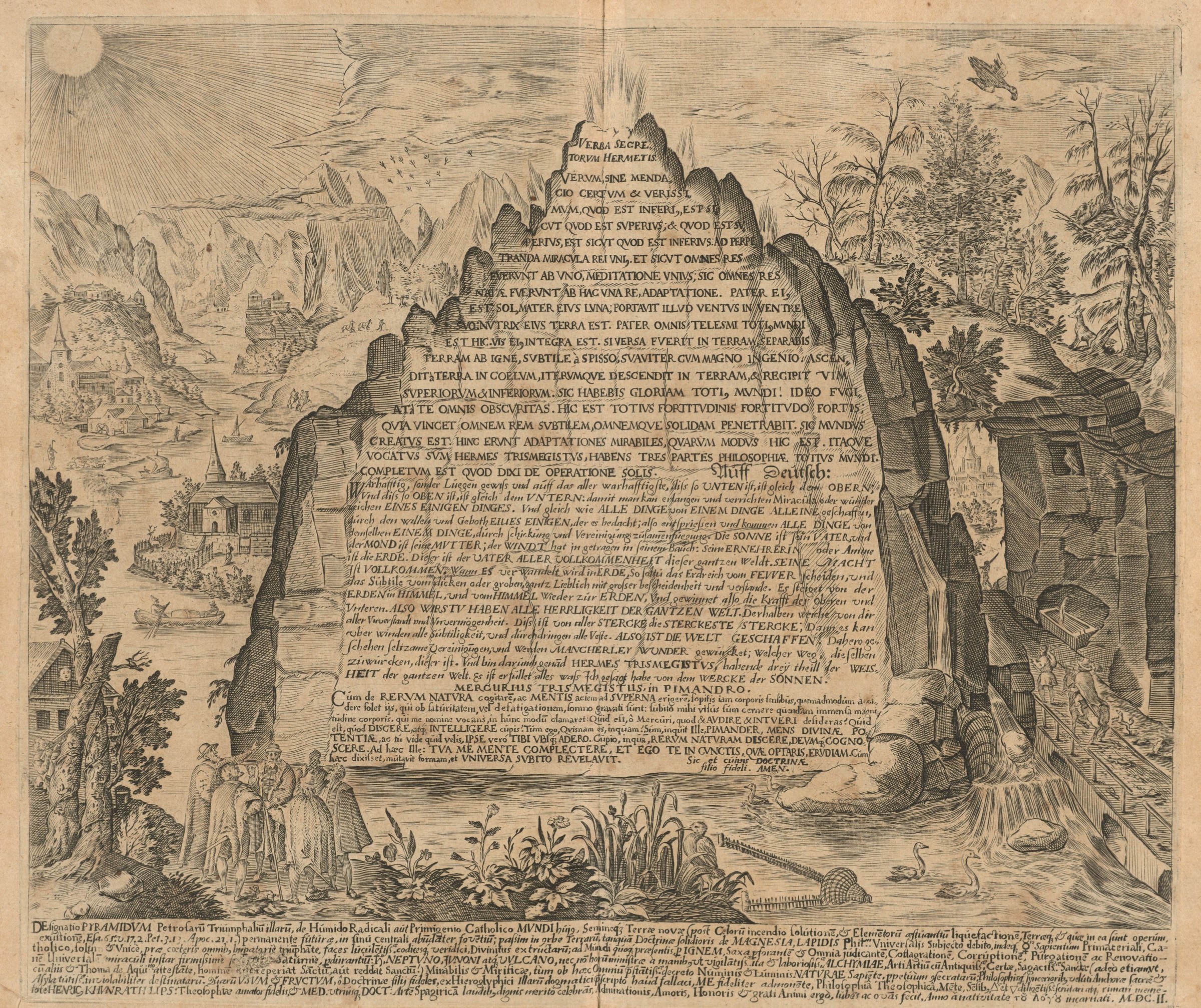
Latin vulgate
English Isaac Newton
1 Verum sine mendacio, certum et verissimum:
1 Tis true without lying, certain and most true.
2 Quod est inferius, est sicut quod est superius, et quod est superius, est sicut quod est inferius, ad perpetranda miracula rei unius.
2 That which is below is like that which is above and that which is above is like that which is below to do the miracle of one only thing.
3 Et sicut omnes res fuerunt ab uno, mediatione unius, sic omnes res natae fuerunt ab hac una re, adaptione.
3 And as all things have been and arose from one by the mediation of one: so all things have their birth from this one thing by adaptation.
4 Pater eius est sol, mater eius luna.
4 The Sun is its father, the moon its mother,
5 Portavit illud ventus in ventre suo.
5 the wind hath carried it in its belly,
6 Nutrix eius terra est.
6 the earth is its nurse.
7 Pater omnis telesmi totius mundi est hic.
7 The father of all perfection in the whole world is here.
8 Vis eius integra est, si versa fuerit in terram.
8 Its force or power is entire if it be converted into earth.
9 Separabis terram ab igne, subtile a spisso, suaviter, cum magno ingenio.
9 Separate thou the earth from the fire, the subtle from the gross sweetly with great industry.
10 Ascendit a terra in coelum, iterumque descendit in terram et recipit vim superiorum et inferiorum.
10 It ascends from the earth to the heaven and again it descends to the earth and receives the force of things superior and inferior.
11 Sic habebis gloriam totius mundi. ideo fugiet a te omnis obscuritas. hic est totius fortitudinis fortitudo fortis; quia vincet omnem rem subtilem, omnemque solida penetrabit.
11 By this means you shall have the glory of the whole world and thereby all obscurity shall fly from you. Its force is above all force, for it vanquishes every subtle thing and penetrates every solid thing.
12 Sic mundus creatus est.
12 So was the world created.
13 Hinc erunt adaptiones mirabiles, quarum modus est hic.
13 From this are and do come admirable adaptations where of the means is here in this.
14 Itaque vocatus sum hermes trismegistos, habens tres partes philosophiae totius mundi.
14 Hence I am called Hermes Trismegist, having the three parts of the philosophy of the whole world.
15 Completum est quod dixi de operatione solis.
15 That which I have said of the operation of the Sun is accomplished and ended.
Latin: Tabula Smaragdina, via Latin Wikisource (public domain). English: Isaac Newton, Keynes MS 28 (public domain), text as quoted in Wikipedia: Emerald Tablet. Pictures: Khunrath 1609 and Merian c. 1618 via Wikimedia Commons (public domain).