
Raziel’s Library™ · beside the Key of Solomon
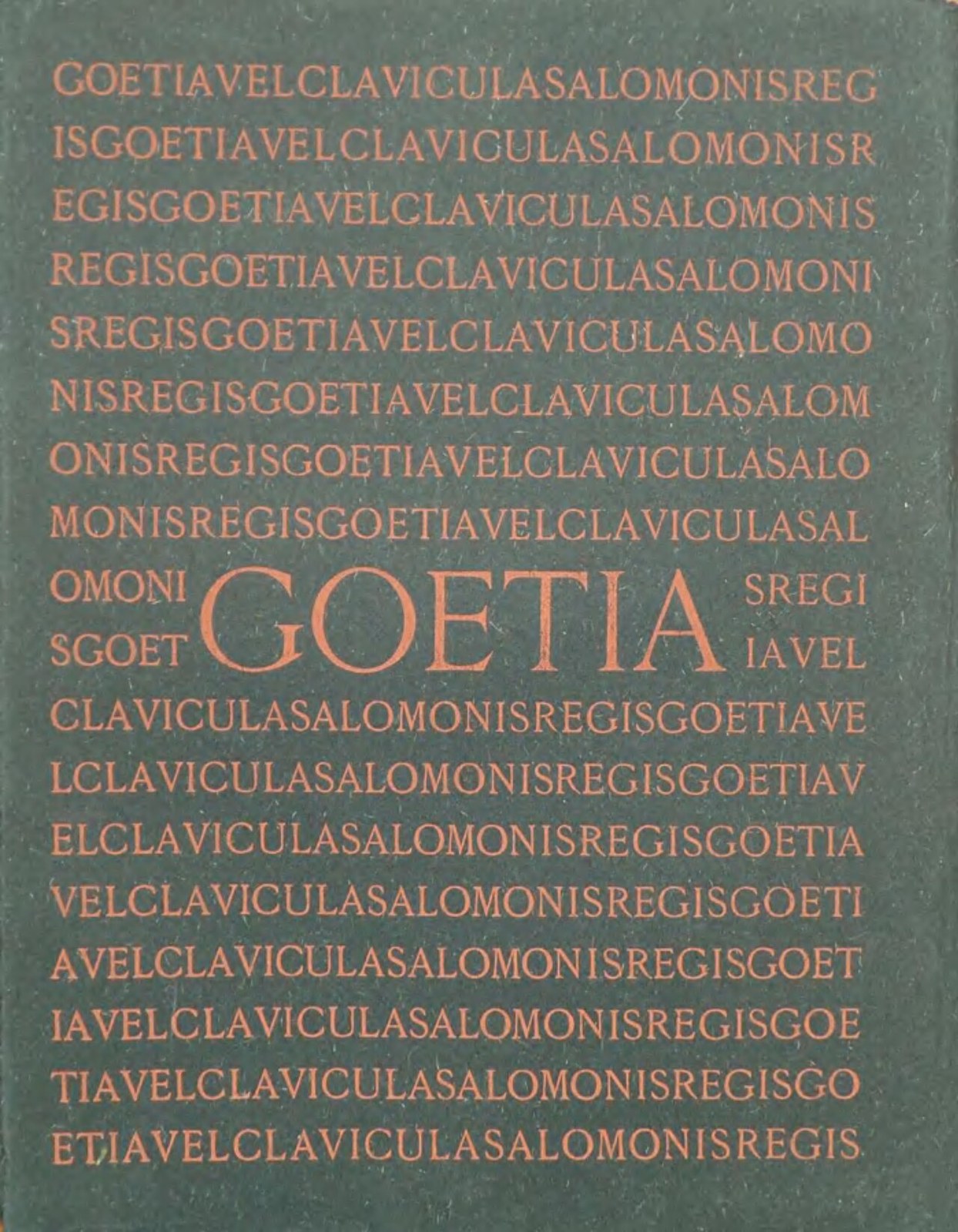
The GoetiaThe Lesser Key of Solomon, Book 1 · Mathers and Crowley, 1904
Public domain in the United States. Text: The Book of the Goetia of Solomon the King, translated by S. L. MacGregor Mathers and edited by Aleister Crowley (1904), as transcribed on English Wikisource from L. W. de Laurence’s 1916 reprint. The original of the Goetia is itself in English: seventeenth-century manuscripts in the British Library (Sloane 3825, 2731 and others), which Mathers collated. Its list of spirits goes back to Johann Weyer’s Latin Pseudomonarchia daemonum (1577); a clean public-domain transcription of Weyer’s Latin was not available, so beside each spirit stands the oldest English version of Weyer’s list, Reginald Scot’s in The Discoverie of Witchcraft (1584), from Brinsley Nicholson’s 1886 reprint. Read the two side by side to see the names, ranks and legions change between 1584 and the Goetia. Seals: the 1904 edition. Engravings: Louis Le Breton for Collin de Plancy’s Dictionnaire infernal (1863).
Contents
- 1 Title page, preface and Preliminary Invocation The 1904 title page, the preface “given forth from our Mountain of A.”, and the Preliminary Invocation of the Bornless One.
- 2 The Initiated Interpretation of Ceremonial Magic Aleister Crowley’s introduction (1904): the spirits of the Goetia as portions of the human brain.
- 3 Preliminary Definition of Magic The definition of magic and the brief description of the five books of the Lemegeton.
- 4 The 72 spirits The 72 spirits with their seals, beside Reginald Scot’s 1584 English of Weyer’s list.
- 5 Observations and the classified list The Moon’s age, the metals of the seals, and the 72 spirits by rank.
- 6 The circle, triangle and other requisites The magical circle, the triangle, hexagram, pentagram, ring, the vessel of brass and the secret seal.
- 7 The conjurations The bath, the first and second conjurations, the constraint, the curses, the welcome and the licence to depart.
- 8 The names explained Mathers’ explanation of the divine names in the conjurations and of the triangles.
- 9 The conjurations in old English The same conjurations rendered by Crowley in mock-medieval English (1904).
The 72 spirits
- Bael
- Agares
- Vassago
- Samigina
- Marbas
- Valefor
- Amon
- Barbatos
- Paimon
- Buer
- Gusion
- Sitri
- Beleth
- Leraje
- Eligos
- Zepar
- Botis
- Bathin
- Sallos
- Purson
- Marax
- Ipos
- Aim
- Naberius
- Glasya-Labolas
- Bune
- Ronové
- Berith
- Astaroth
- Forneus
- Foras
- Asmoday
- Gaap
- Furfur
- Marchosias
- Stolas
- Phenex
- Halphas
- Malphas
- Raum
- Focalor
- Vepar
- Sabnock
- Shax
- Viné
- Bifrons
- Uvall
- Haagenti
- Crocell
- Furcas
- Balam
- Alloces
- Camio
- Murmur
- Orobas
- Gremory
- Osé
- Amy
- Oriax
- Vapula
- Zagan
- Volac
- Andras
- Haures
- Andrealphus
- Cimejes
- Amdusias
- Belial
- Decarabia
- Seere
- Dantalion
- Andromalius
See the pictures and seals (free to download)
Text: The Lesser Key of Solomon on English Wikisource (Mathers and Crowley 1904; de Laurence reprint 1916); scan of the 1904 edition on Wikimedia Commons. Scot: The Discoverie of Witchcraft (1584), book XV, chapter 2, Nicholson’s reprint (1886), via Project Gutenberg. Seals and engravings: Wikimedia Commons, public domain. This book describes the summoning of spirits; it is kept here as a historical and literary text.