
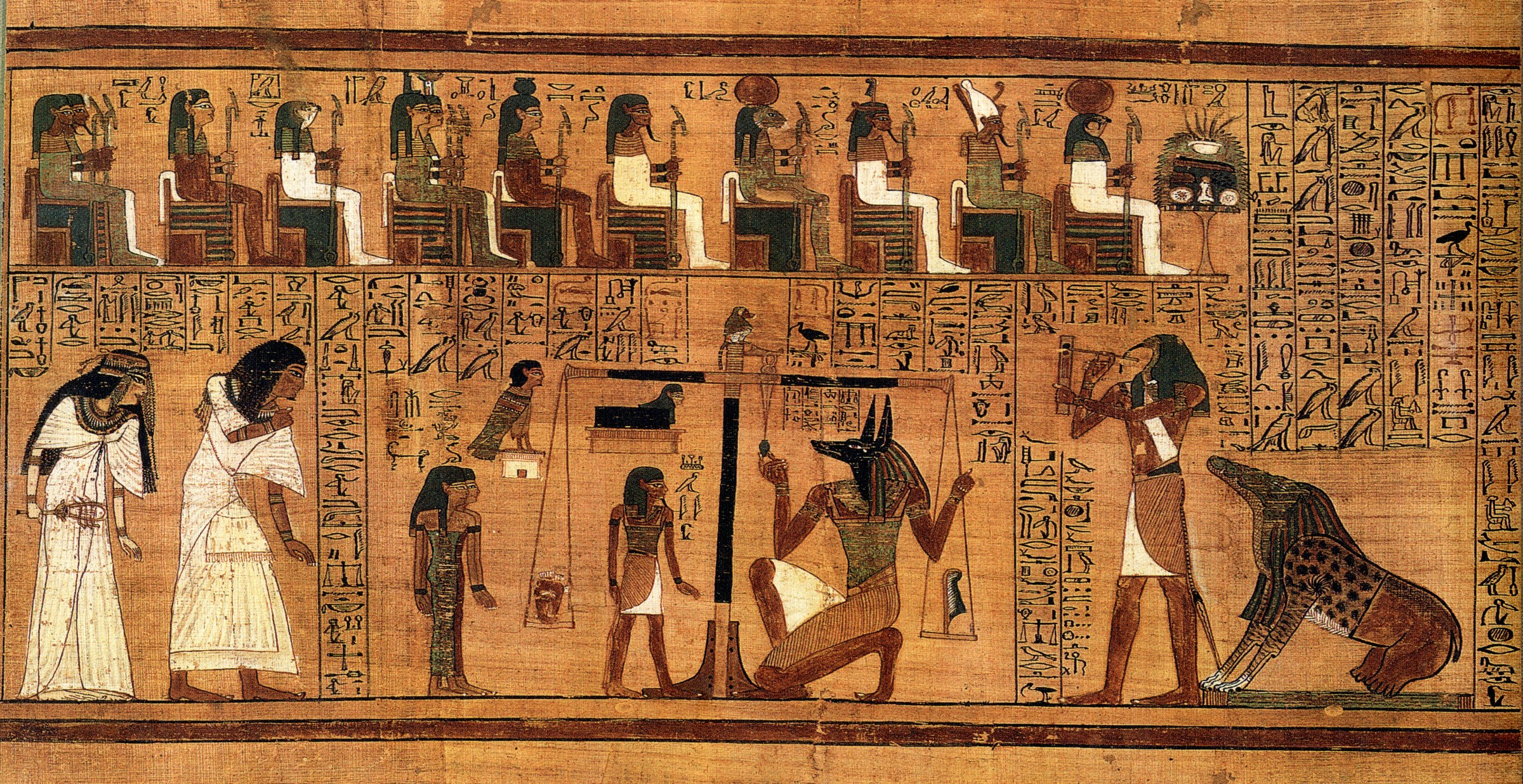
Egyptian shelf · Papyrus of Ani, c. 1250 BC
The Egyptian Book of the DeadThe Papyrus of Ani · Budge’s 1913 English and 1895 transliteration
Public domain. English: E. A. Wallis Budge, The Papyrus of Ani: A Reproduction in Facsimile (1913), completed from the public-domain scans and OCR on archive.org (papyrusofanirepr01budg, papyrusofanirepr02budg). The order of the sections still follows the 1913 volume II running translation (and the earlier Wikisource transcription). The original is written in cursive hieroglyphs on the papyrus itself; the plates remain beside the text and on the plates page, each free to download. Beside the 1913 English, this edition adds Budge’s public-domain hieroglyphic transliteration from the 1895 Ani edition (TheBookOfTheDead-Budge-1895), marked where the OCR is unclear.
The parts
- 1 Hymns to Osiris and to Ra ✦ plates
- 2 The Chapters of Coming Forth by Day ✦ plates
- 3 The weighing of the heart of Ani ✦ plates
- 4 The Seven Arits and the Pylons of the House of Osiris ✦ plates
- 5 The priests Anmutef and Sameref; the Judges in Anu
- 6 The Tuat, the Solar Litany and the New Moon
- 7 The Negative Confession
- 8 The Deification of the Members
- 9 The funeral chamber, the rudders of heaven and Hathor ✦ plates
See all the papyrus plates (8, free to download)
Place names in the text
Budge’s Egyptian names and the names they are better known by:
- Abtu · Abydos
- Abu · Elephantine
- Anu · Heliopolis
- Bast · Bubastis
- Hensu · Herakleopolis
- Het-ka-Ptah · Memphis
- Khemenu · Hermopolis
- Per-Menu · Panopolis
- Qerrt · Elephantine
- Sau · Sais
- Sekhem · Letopolis
- Suat · Asyut
- Tetu · Busiris
- Two Lands · Upper and Lower Egypt
English: E. A. Wallis Budge, The Papyrus of Ani: A Reproduction in Facsimile (London: The Medici Society, 1913; archive.org papyrusofanirepr01budg, papyrusofanirepr02budg), public domain. The Hall’s earlier pages followed the English Wikisource transcription, which is marked incomplete (text only, and a few printed lacunae). This edition keeps that 1913 running English, notes lacunae that are already in Budge’s print, and adds Budge’s 1895 hieroglyphic transliteration (archive.org TheBookOfTheDead-Budge-1895) as the typed original. Plates: the Papyrus of Ani, British Museum EA 10470, c. 1250 BC, via Wikimedia Commons (public domain).