
Shiva, Egypt, Mesopotamia and the art of angels
Sacred art and ideas side by side, shown with respect. Each link carries a label. Scholarly means scholars widely note the link. Role-only means the figures share a job, not a history. RUEZALS AKHET is our own House reading. We do not give scores.
Shiva: Rudra, the dancer and the destroyer of ignorance
From Rudra to Shiva
In the Rigveda (Griffith), Rudra is a fierce storm god who is also called on as a healer. The word śiva, meaning auspicious or kind, is first used as an epithet. By the Śvetāśvatara Upanishad (in Müller’s Sacred Books of the East), Rudra-Śiva is praised as the one lord behind the world. Scholarly
Nataraja, Lord of the Dance
Chola-period bronzes from South India (about the 10th–12th centuries) show Shiva dancing inside a ring of fire. One hand holds a drum, the sound of creation, and another holds a flame, the fire of dissolution. One foot rests on a small figure of ignorance. The dance holds creation, keeping and ending in one movement. Scholarly
Beside Raziel
Raziel keeps the secrets of heaven and gives them as a book. Shiva is the great yogi and teacher (Dakshinamurti) who teaches in silence. Both stand for knowledge that frees, not knowledge that rules. Role-only To the House, the ring of fire and the book of the Raziel tradition are two pictures of one gift: light given to people who are ready. RUEZALS AKHET
Egypt: Thoth, Ma’at and the weighing of the heart
In the Book of the Dead (E. A. Wallis Budge, 1895), the heart of the dead is weighed against the feather of Ma’at, truth and right order. Thoth, the ibis-headed god of writing and wisdom, records the result. Anubis tends the scales. Scholarly
Thoth is the divine scribe, and in Hellenistic times he was identified with Hermes. Raziel is the angel of secrets who gives a written book to Adam. Both carry heavenly knowledge into writing. Role-only Later writers tied Hermes Trismegistus (Thoth) to the Western magical books, including the tradition behind the Three Books of Occult Philosophy. Scholarly
Mesopotamia: tablets of heaven and the seventh king
In Sumerian king lists, Enmeduranki is the seventh king before the Flood. Later tradition says the gods taught him the secrets of heaven and earth on tablets. Enoch is the seventh from Adam (Genesis 5) and is taken up to learn heaven’s secrets in 1 Enoch. Many scholars compare the two figures. Scholarly
The Enuma Elish (L. W. King, The Seven Tablets of Creation, 1902) tells of Marduk shaping the world from the body of Tiamat. Tablet XI of the Epic of Gilgamesh tells the flood story of Utnapishtim. Legends of Truth sets these beside Genesis. Scholarly
The apkallu were the seven sages sent before the Flood to teach crafts and writing. They are often shown winged or wearing fish cloaks. Like the Watchers of Enoch, they are heavenly teachers who come down to people, though the Watchers’ teaching goes wrong. Role-only
Winged guardians: cherubim, lamassu and devas
And the cherubims shall stretch forth their wings on high, covering the mercy seat with their wings, and their faces shall look one to another; toward the mercy seat shall the faces of the cherubims be.
Exodus 25:20, King James Version
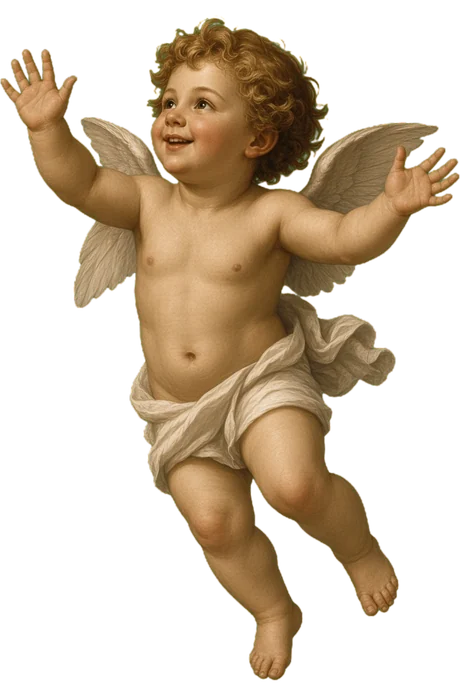
The cherubim of the Ark guard a holy place with their wings. In Assyria, lamassu, winged bulls with human heads, guarded palace gates. In Egypt, the goddesses Isis and Nephthys spread protecting wings. In Buddhist art, devas and flying apsaras surround the Buddha. Our Renaissance-style cherubs belong to a much later art tradition of playful child-angels. They are not the cherubim of Exodus, but they share the old job of keeping company with the holy. Scholarly Role-only
Heavenly scribes and books from above
Many traditions tell of writing that comes from heaven. Raziel gives Adam a book. Enoch writes what the angels show him. Thoth records the judgment. Enmeduranki receives the tablets of the gods. The Vedas are called śruti, “what was heard” by the seers. Role-only In the Hall, we read all of these as one family of stories about love handing wisdom down. RUEZALS AKHET
See also: Connections (parallels across the scriptures) · Scriptoria · Legends of Truth