Japanese shelf · Prince Toneri · 日本書紀 · Aston 1896
日本書紀 · NihongiChronicles of Japan from the Earliest Times to A.D. 697 · 30 books
Public domain. Compiled in 720 under Prince Toneri and presented to Empress Genshō. Translated by W. G. Aston, 1896. The kanbun is shown beside Aston’s English. Book I is divided so that the same events can be read beside the Kojiki; the two chronicles do not always agree in order or in detail.
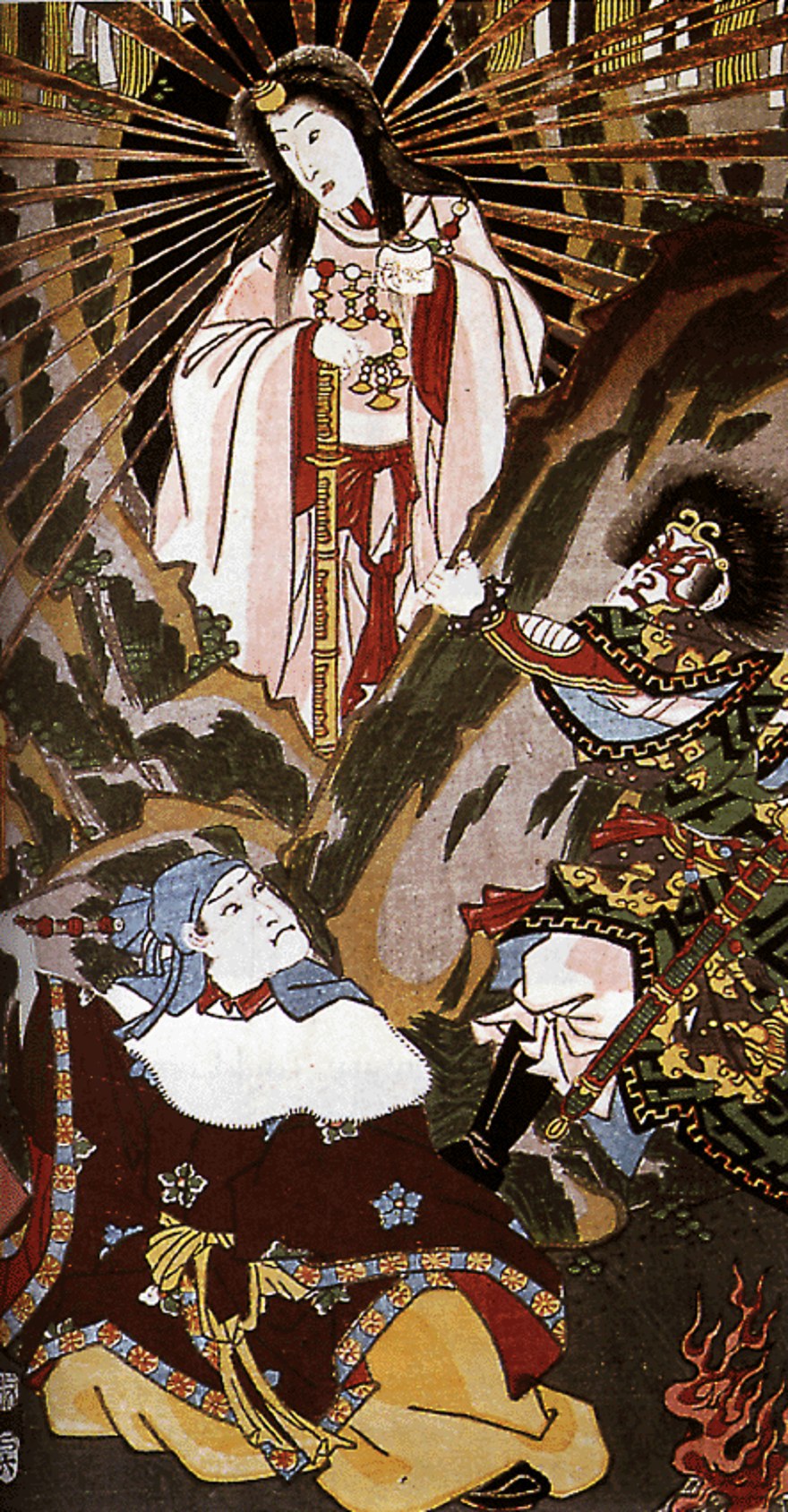
Public-domain art for this book, with credits and downloads
Book I · The Age of the Gods, Part I
- 1. The Creation of Heaven and Earth
- 2. The Seven Divine Generations
- 3. The Heavenly Floating Bridge and the Island of Onogoro
- 4. The Courtship of Izanagi and Izanami
- 5. The Birth of the Eight Great Islands
- 6. The Birth of the Seas, Mountains and Plants
- 7. The Birth of the Sun-Goddess
- 8. The Moon-God, Hiruko and Sosa no wo
- 9. Other writings: the death of Izanami and the Fire-God
- 10. Other writings: the Land of Yomi
- 11. Other writings: the purification and the charge to the three children
- 12. Sosa no wo goes up to Heaven
- 13. Izanagi’s retirement
- 14. The Oath of Amaterasu and Sosa no wo
- 15. The Ravages of Sosa no wo
- 16. The Heavenly Rock-Cave
- 17. The Expulsion of Sosa no wo
- 18. The Eight-Forked Serpent
- 19. The Palace of Suga
- 20. Oho-na-mochi and the making of the land
Book II · The Age of the Gods, Part II
- 1. The Descent of the Heavenly Grandchild
- 2. The luck of the sea and the luck of the mountains
- 3. Ugayafukiaezu and the birth of the first emperor
Books III–XXX · The emperors
- Book III. The Emperor Kami-Yamato Ihare-biko (Jimmu Tennō) 神日本磐余彥天皇(神武天皇)
- Book IV. From the Emperor Kami-Nunagaha-mimi (Suizei Tennō) to Kaika Tennō 綏靖天皇至開化天皇
- Book V. The Emperor Mimaki-iri-biko-i-niye (Sūjin Tennō) 御間城入彥五十瓊殖天皇(崇神天皇)
- Book VI. The Emperor Iku-me-iri-hiko-i-sachi (Suinin Tennō) 活目入彥五十狹茅天皇(垂仁天皇)
- Book VII. The Emperors Oho-tarashi-hiko (Keikō Tennō) and Seimu Tennō 大足彥忍代別天皇(景行天皇)・成務天皇
- Book VIII. The Emperor Tarashi-nakatsu-hiko (Chūai Tennō) 足仲彥天皇(仲哀天皇)
- Book IX. Okinaga-tarashi-hime no Mikoto (Jingū Kōgō) 氣長足姬尊(神功皇后)
- Book X. The Emperor Homuda (Ōjin Tennō) 譽田天皇(應神天皇)
- Book XI. The Emperor Oho-sazaki (Nintoku Tennō) 大鷦鷯天皇(仁德天皇)
- Book XII. The Emperor Iza-ho-wake (Richū Tennō) 去來穗別天皇(履中天皇)
- Book XIII. The Emperor Wo-asa-tsuma Wakugo no Sukune (Ingyō Tennō) and neighbouring reigns 雄朝津間稚子宿禰天皇(允恭天皇)等
- Book XIV. The Emperor Oho-hatsuse Wakatake (Yūryaku Tennō) 大泊瀨幼武天皇(雄略天皇)
- Book XV. From the Emperor Shiraga (Seinei Tennō) to Ninken Tennō 白髮武廣國押稚日本根子天皇(清寧天皇)等
- Book XVI. The Emperor Wohatsuse Waka-sazaki (Buretsu Tennō) 小泊瀨稚鷦鷯天皇(武烈天皇)
- Book XVII. The Emperor Wohodo (Keitai Tennō) 男大迹天皇(繼體天皇)
- Book XVIII. The Emperors Magari no Ohoye (Ankan Tennō) and Senka Tennō 廣國押建金日天皇(安閑天皇)・宣化天皇
- Book XIX. The Emperor Ame-kuni Oshi-hiraki Hiro-niha (Kimmei Tennō) 天國排開廣庭天皇(欽明天皇)
- Book XX. The Emperor Nunakura Futo-tama-shiki (Bidatsu Tennō) 渟中倉太珠敷天皇(敏達天皇)
- Book XXI. The Emperors Tachibana no Toyohi (Yōmei Tennō) and Sushun Tennō 橘豐日天皇(用明天皇)・崇峻天皇
- Book XXII. The Empress Toyo-mike Kashiki-ya-hime (Suiko Tennō) 豐御食炊屋姬天皇(推古天皇)
- Book XXIII. The Emperor Okinaga Tarashi-hi Hiro-nuka (Jomei Tennō) 息長足日廣額天皇(舒明天皇)
- Book XXIV. The Empress Ame Toyo-takara Ikashi-hi Tarashi-hime (Kōgyoku Tennō) 天豐財重日足姬天皇(皇極天皇)
- Book XXV. The Emperor Ame-yorodzu Toyo-hi (Kōtoku Tennō) 天萬豐日天皇(孝德天皇)
- Book XXVI. The Empress Ame-toyo-takara Ikashi-hi Tarashi-hime (Saimei Tennō) 天豐財重日足姬天皇(齊明天皇)
- Book XXVII. The Emperor Ame Mikoto Hirakasu Wake (Tenji Tennō) 天命開別天皇(天智天皇)
- Book XXVIII. The Emperor Ama no Nunahara Oki no Mabito, Part I (Tenmu Tennō) 天渟中原瀛真人天皇上(天武天皇)
- Book XXIX. The Emperor Ama no Nunahara Oki no Mabito, Part II (Tenmu Tennō) 天渟中原瀛真人天皇下(天武天皇)
- Book XXX. The Empress Takama no Hara Hiro-no no Hime (Jitō Tennō) 高天原廣野姬天皇(持統天皇)
English: W. G. Aston, Nihongi: Chronicles of Japan from the Earliest Times to A.D. 697 (published for the Japan Society by Kegan Paul, Trench, Trübner, 1896), public domain, text via English Wikisource (proofread from the 1896 printing). Footnotes are Aston’s. Kanbun: 舍人親王等『日本書紀』, presented 720, public domain, text via Chinese Wikisource (日本書紀/卷第一–卷第三十). Phonetic and kun notes in the source are kept in small type. Where the source marks a passage 一書曰 (“in one writing it is said”), it is shown as a variant, not as the main narrative. Book I is divided into sections so that the same events can be read beside the Kojiki; the two chronicles do not always agree in order or in detail.